Elon Musk Net Worth, Business Ventures, and Wealth Accumulation: A Deep Dive
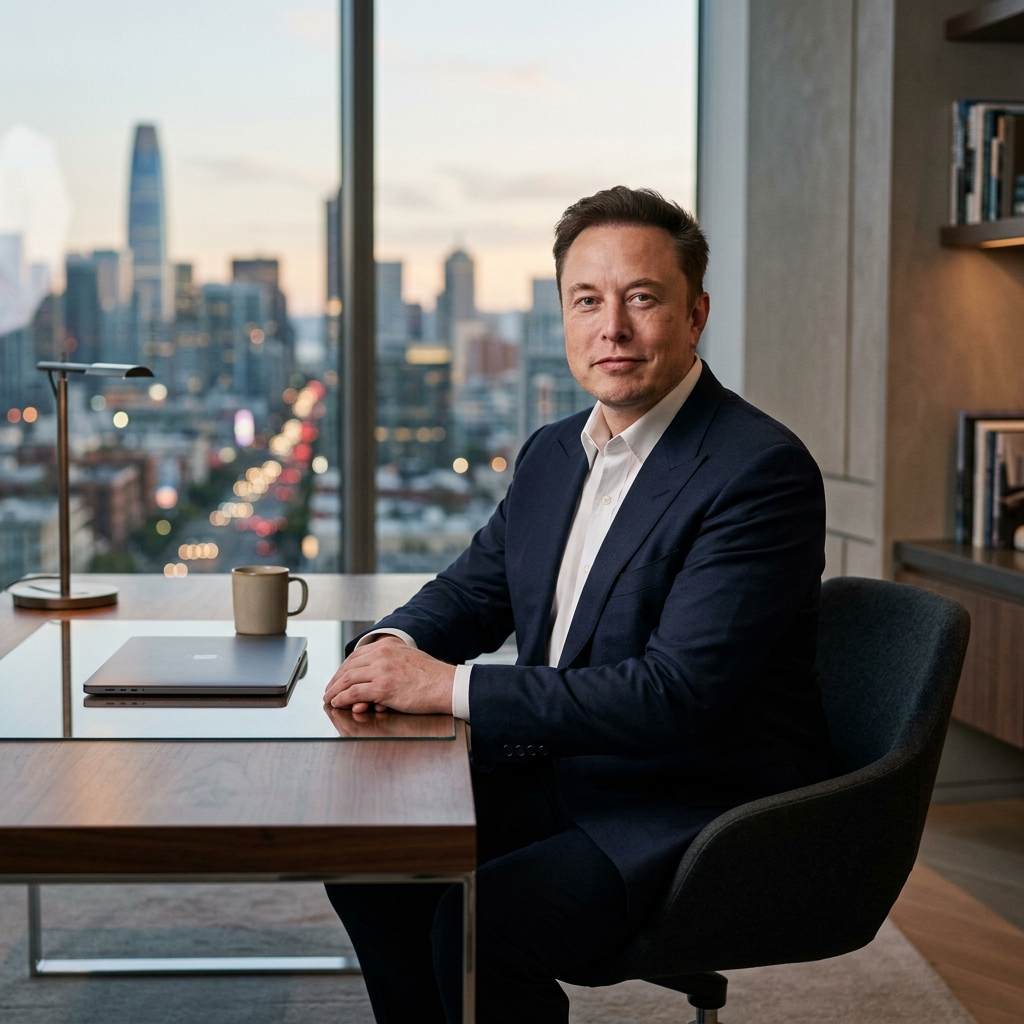
Elon Musk Net Worth, Business Ventures, and Wealth Accumulation: A Deep Dive
Introduction When discussing the monumental shifts in modern technology and wealth accumulation, one name consistently emerges at the forefront of the conversation. Elon Musk, a visionary entrepreneur and industrialist, has redefined what it means to be a self-made billionaire in the 21st century.
His approach to innovation spans multiple industries, from electric vehicles to commercial spaceflight and advanced artificial intelligence. Welcome to this comprehensive profile brought to you by World Billionaire Day, your premier source for insights into the financial strategies of the world's elite.
Understanding Elon Musk's net worth requires examining a complex portfolio of interconnected ventures. Currently, his estimated net worth stands at an astonishing figure of approximately $210 Billion (Source: Forbes/Bloomberg, as of June 15, 2026).
He consistently ranks among the top two wealthiest individuals on the planet (Source: Forbes Real-Time Billionaires, as of June 15, 2026). At 54 years of age (Source: Public Records, as of June 15, 2026), Musk continues to expand his influence across new frontiers of engineering and digital communication.
This article will dissect the primary drivers behind his wealth, exploring the milestones that catapulted him into the highest echelons of global billionaires. We will examine the operational philosophy that allows him to manage several multi-billion dollar enterprises simultaneously. Furthermore, we will analyze how his unique approach to capital allocation distinguishes him from traditional investors.
The Genesis of Wealth: From Zip2 to PayPal The foundation of Elon Musk's financial empire was built during the late 1990s dot-com boom. His first major venture was Zip2, a web software company he co-founded with his brother Kimbal.
Zip2 developed and marketed an Internet city guide for the newspaper publishing industry, a novel concept at the time. The company quickly gained traction, securing contracts with major publications like The New York Times and the Chicago Tribune.
In 1999, the computer manufacturer Compaq acquired Zip2 for nearly $300 million in cash. Musk, who held a significant ownership stake, received $22 million from the sale. This initial windfall provided the crucial capital required for his next, far more ambitious endeavor in the financial sector.
He subsequently co-founded X.com, one of the first federally insured online banking platforms. Through a strategic and highly competitive merger with Confinity, X.com eventually evolved into the global payment processing giant known today as PayPal. PayPal revolutionized digital transactions, fundamentally changing how money changed hands on the internet.
The platform quickly dominated the nascent e-commerce landscape, becoming the preferred payment method for eBay users. In 2002, eBay acquired PayPal for $1.5 billion in stock, a monumental exit for the founders.
As the largest shareholder, Musk walked away with roughly $165 million. This early success solidified his reputation as an astute technology entrepreneur and provided the seed money for his future, capital-intensive ventures.

Revolutionizing Aerospace: SpaceX's Valuation and Milestones Perhaps the most audacious of Musk's enterprises is Space Exploration Technologies Corp, better known to the world as SpaceX. Founded in 2002, the company's primary objective was to drastically reduce space transportation costs to enable the ultimate colonization of Mars. SpaceX disrupted a stagnant aerospace industry that was historically dominated by government-funded legacy contractors and bureaucratic inefficiencies.
The successful launch and subsequent recovery of the Falcon 9 reusable rockets marked a historic paradigm shift in orbital logistics. By dramatically lowering the cost per kilogram to low Earth orbit, SpaceX captured a massive, undisputed share of the global commercial launch market. The company’s valuation has skyrocketed as a result of these technical triumphs, recently hitting an estimated $180 Billion (Source: Private Market Valuations, as of June 15, 2026).
Beyond commercial payload delivery, SpaceX is heavily invested in its Starlink project. This ambitious initiative aims to provide global high-speed broadband internet via a mega-constellation of low Earth orbit satellites. Starlink addresses a critical gap in global telecommunications, targeting underserved and remote populations worldwide.
As Starlink expands its subscriber base globally, SpaceX's overall enterprise value is expected to grow exponentially. This recurring revenue model provides a stable financial foundation for the company's more speculative deep-space exploration goals. Consequently, SpaceX remains one of the most powerful engines driving the continued expansion of Musk's net worth.
The Electric Vehicle Paradigm: Tesla's Market Dominance While SpaceX dominates the skies, Tesla Motors revolutionized the terrestrial transportation sector and the global energy market. Musk joined Tesla in 2004 as an early investor and chairman of the board, later assuming the hands-on role of CEO. Under his meticulous leadership, Tesla transformed the electric vehicle (EV) from a niche, compromised novelty into a mainstream consumer necessity.
The launch of the flagship Model S proved conclusively that electric cars could be both highly performant and aesthetically desirable. Subsequent, more affordable models, including the Model 3 and Model Y crossover, have achieved unprecedented sales volumes globally. Tesla's market capitalization has historically eclipsed the combined valuations of multiple legacy automakers, reflecting immense investor confidence.
Tesla's financial success is a cornerstone of Musk's immense wealth, primarily driven by his substantial equity stake and heavily scrutinized performance-based compensation packages. The company's relentless focus on full autonomous driving technology and utility-scale energy storage solutions positions it uniquely in the market. Many analysts view Tesla not merely as a traditional auto manufacturer, but as a highly diversified technology and energy conglomerate.
The continuous expansion of Gigafactories worldwide ensures Tesla's production capacity can meet surging international demand. Facilities in Shanghai, Berlin, and Texas have dramatically localized production, reducing logistical costs and improving profit margins. This aggressive global footprint is essential to maintaining Tesla's dominance in the face of increasing competition from traditional auto giants pivoting to electric platforms.

Beyond The Mainstream: The Boring Company, Neuralink, and xAI Elon Musk's investment philosophy involves tackling complex, long-term civilizational challenges that others deem financially unviable. The Boring Company, founded in 2016, aims to solve urban traffic congestion through the construction of extensive, high-speed underground tunnel networks. While still in its developmental and regulatory stages, the company has secured lucrative contracts for proof-of-concept projects like the Las Vegas Convention Center Loop.
Neuralink, another deeply futuristic venture, is pioneering the complex field of brain-machine interfaces. The neurotechnology company develops ultra-high bandwidth implantable devices designed to facilitate direct, seamless communication between the human brain and computers.
If successful, Neuralink could revolutionize the medical treatment of severe neurological conditions such as paralysis and blindness. Furthermore, it holds the potential to significantly enhance baseline human cognitive capabilities, merging human intelligence with artificial systems.
The long-term financial implications of such a medical and technological breakthrough are virtually limitless. In response to the rapid, global advancement of artificial intelligence, Musk also launched xAI. This venture was established to develop advanced AI models with a focus on deep, rigorous scientific understanding of the universe.
xAI aims to compete directly with established AI research organizations like OpenAI and Google's DeepMind. By positioning xAI at the absolute forefront of generative AI and machine learning, Musk ensures his portfolio remains heavily exposed to the most transformative technology of our current era. These peripheral companies, while smaller than Tesla or SpaceX, represent high-leverage bets on the fundamental future of human capability.
The X Acquisition and its Financial Implications One of the most highly publicized and controversial financial maneuvers in recent history was Musk's acquisition of the social media platform Twitter, now officially rebranded as X. In late 2022, Musk completed the purchase of the platform for an unprecedented $44 billion. This massive acquisition required significant immediate capital, compelling Musk to leverage and liquidate a portion of his highly valuable Tesla holdings.
The transition to X involved aggressive corporate restructuring, massive workforce reductions, and a strategic pivot towards becoming a comprehensive "everything app." Musk's grand vision for X includes integrating peer-to-peer financial services, enhanced video streaming capabilities, and robust long-form content creation tools. While the initial acquisition temporarily impacted his liquid net worth, the long-term strategy aims to significantly multiply the platform's intrinsic value.
The ongoing financial health of X remains a topic of intense, daily scrutiny among market analysts and media commentators. The introduction of paid subscription models, such as X Premium, and novel advertising frameworks are critical components of the platform's new monetization strategy. How X navigates the highly competitive social media landscape will undoubtedly influence Musk's overall wealth trajectory and public perception in the coming years.
Philanthropy and Strategic Giving Unlike some of his billionaire peers who favor traditional charitable foundations, Elon Musk's approach to philanthropy is often deeply intertwined with his core business objectives. He has signed the Giving Pledge, a public commitment by the world's wealthiest individuals to dedicate the majority of their wealth to charitable causes during their lifetime. However, Musk frequently and vocally argues that his commercial enterprises inherently serve the greater, existential good of humanity.
The Musk Foundation, established quietly in 2002, provides targeted grants in support of renewable energy research, human space exploration advocacy, and specialized pediatric research. He has also made significant, high-profile donations to initiatives focused on AI safety and the mitigation of broader existential risks. His philanthropic strategy heavily emphasizes high-impact, technologically driven solutions to the most pressing global challenges.
Rather than funding conventional social programs, Musk prefers allocating capital where he believes it can fundamentally alter the trajectory of human civilization. This highly utilitarian approach to wealth redistribution is consistent with his broader engineering mindset.
Frequently Asked Questions About Elon Musk's Net Worth and Assets
What is the primary source of Elon Musk's net worth? The vast majority of Musk's immense wealth is intricately tied up in his substantial equity ownership of Tesla and SpaceX. Consequently, his net worth fluctuates wildly on a daily basis based on the public stock market performance of Tesla and the periodic private market funding rounds of SpaceX. He holds relatively little cash compared to his overall paper wealth.
Does Elon Musk own a lot of real estate? Historically, Musk owned a substantial, highly valuable portfolio of luxury mansions concentrated in Southern California. However, several years ago, he publicly vowed to "own no house" and systematically sold off nearly all of his residential properties. He is now known to reside in relatively modest accommodations, often renting properties near his primary manufacturing facilities in Boca Chica, Texas.
How does Elon Musk use his wealth to influence global industries? Musk utilizes his massive capital reserves to aggressively fund deep research and development in sectors characterized by exceptionally high barriers to entry, such as commercial aerospace and advanced neurotechnology. By personally absorbing significant, initial financial risks, he accelerates global innovation and forces stagnant legacy industries to adapt rapidly or face total obsolescence.
What economic impact does his wealth and his companies have on the global economy? His various corporate entities directly employ tens of thousands of highly skilled individuals across advanced manufacturing, aerospace engineering, and software development. Furthermore, the massive global supply chains supporting the production goals of Tesla and SpaceX generate substantial, secondary economic activity worldwide. His companies are major drivers of regional economic growth wherever they establish operations.
Will Elon Musk eventually become the world's first trillionaire? Many leading financial analysts speculate that Musk possesses the most realistic, visible path to eventual trillionaire status. This unprecedented historical milestone would likely depend heavily on SpaceX's successful, global deployment and monetization of the Starlink network. Additionally, it would require Tesla to successfully deploy and monetize a global fleet of fully autonomous robotaxis, fundamentally changing the economics of transportation.

Strategic Takeaways for Modern Entrepreneurs The historical trajectory of Elon Musk's net worth offers several profound, actionable lessons for aspiring global entrepreneurs. Firstly, his unwavering willingness to reinvest nearly all of his personal capital into high-risk, high-reward ventures sets him entirely apart from traditional, risk-averse investors. He consistently risks his fortune to ensure the survival and success of his most ambitious projects.
Secondly, his rigid focus on first-principles thinking allows him to systematically identify massive inefficiencies in established, complacent markets. By breaking down complex problems to their fundamental physical realities, his teams can engineer entirely novel, highly efficient solutions. This approach was crucial in radically lowering the cost of rocket launches and electric vehicle battery packs.
Moreover, Musk's unique ability to articulate a highly compelling, almost science-fiction vision for the future attracts top-tier engineering talent and essentially unlimited investment capital. His businesses are perceived not merely as consumer products, but as crucial, ambitious missions that inspire immense public interest and fierce brand loyalty. Understanding this unique dynamic is absolutely crucial for comprehending the true scale of his financial and cultural achievements.
Conclusion and Final Thoughts Elon Musk's extraordinary financial journey is a definitive testament to the immense power of relentless technological innovation and aggressive vertical integration. From the early, highly lucrative days of Zip2 to the current, expansive era of commercial space exploration and generative artificial intelligence, his portfolio represents a masterclass in modern industrial dominance. His staggering estimated net worth of $210 Billion (Source: Forbes/Bloomberg, as of June 15, 2026) is merely a numerical reflection of the systemic, global value his numerous enterprises have created.
As he continues to push the absolute boundaries of what is technologically and economically feasible, his personal wealth will likely experience further, unprecedented periods of massive growth. The interconnected nature of his companies forms a formidable economic moat that few competitors can hope to breach.
For ongoing, detailed analysis of wealth creation strategies and comprehensive profiles of the world's most influential business leaders, be sure to visit World Billionaire Day. Explore more billionaire profiles and wealth insights to understand the complex mechanics behind the world's most impressive fortunes.