The 2026 AI Wealth Explosion: The Richest Artificial Intelligence Billionaires
The 2026 AI Wealth Explosion: The Richest Artificial Intelligence Billionaires
The economic landscape of 2026 is defined by a singular, overwhelming force: Artificial Intelligence. The rapid commercialization and deployment of generative AI, specialized neural networks, and massive language models have not only reshaped industries but have also created an unprecedented surge in individual wealth. According to the latest data, there are now at least 86 billionaires whose fortunes are inextricably tied to the AI sector. Astoundingly, 45 of these individuals became billionaires for the very first time in the past year alone.
This wealth explosion is fundamentally different from previous tech booms. The value being generated by AI is not predicated on speculative consumer eyeballs or ad revenue projections, but rather on foundational infrastructure, enterprise productivity, and deep technological moats. The collective wealth of these AI-linked billionaires stands at a staggering $2.9 trillion, a sum that rivals the GDP of major developed nations. To put this in perspective, six of the world’s ten richest people have built their fortunes on foundations heavily influenced by artificial intelligence.
For a broader understanding of how this technological revolution compares to historical wealth creation events, and for more comprehensive insights into the global elite, visit World Billionaire Day. Our rich lists and billionaire biographies provide the definitive context for this modern financial phenomenon.
In this deep dive, we will explore the definitive list of the richest AI billionaires in 2026. We will break down their net worths, the companies that generated their wealth, and the unique positions they occupy within the rapidly expanding "AI stack."

The Titans of Infrastructure and Hardware
Before software can learn, it requires immense computational power. The individuals who supply the "picks and shovels" of the AI gold rush have seen the most reliable and spectacular wealth accumulation.
1. Jensen Huang: The Silicon Sovereign
Company: Nvidia
Estimated Net Worth: $165 Billion – $200 Billion
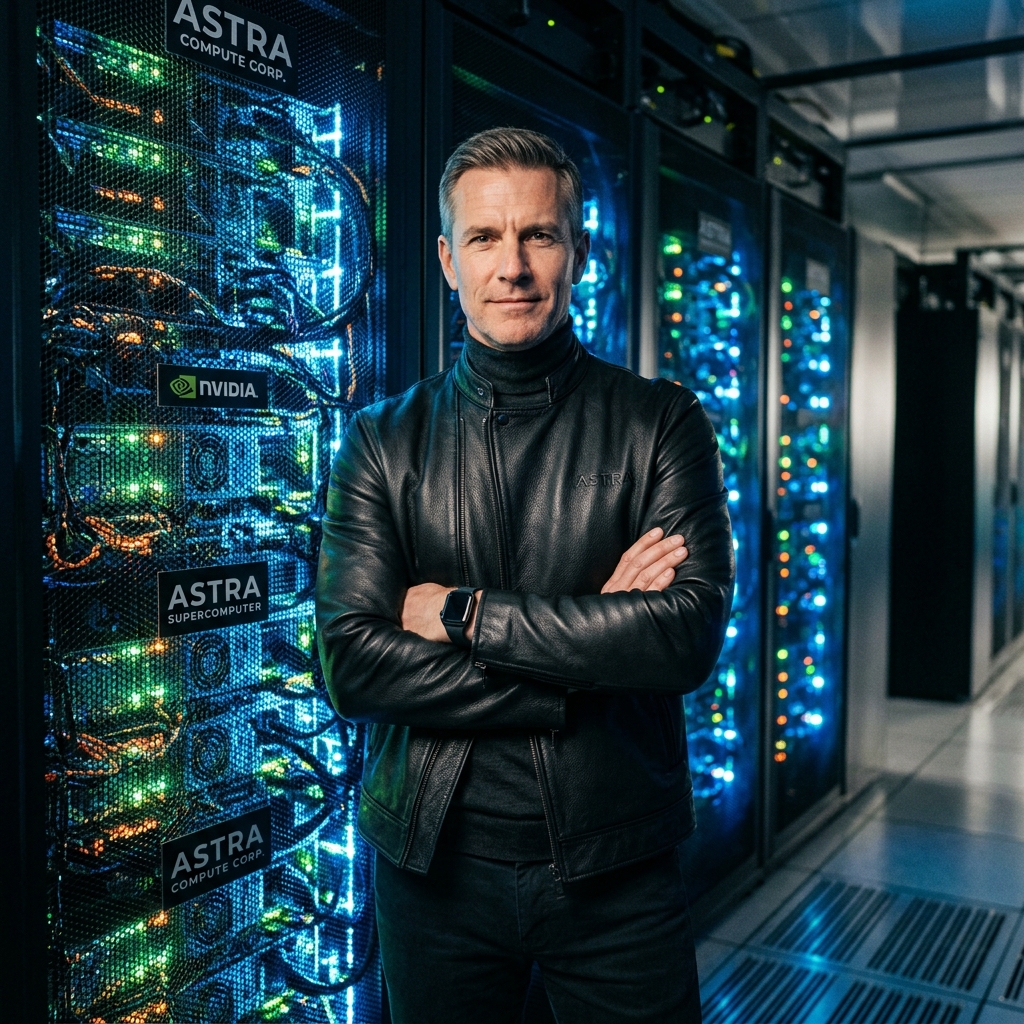
Jensen Huang, the leather-jacket-clad CEO and co-founder of Nvidia, remains the undisputed king of AI hardware. His estimated net worth fluctuates between $165 billion and $200 billion, driven almost entirely by his roughly 3.5% stake in the company. Nvidia’s graphics processing units (GPUs) are the fundamental building blocks of the entire artificial intelligence industry. Without Nvidia's silicon, the training of large language models simply halts.
Huang’s visionary pivot over a decade ago—repurposing gaming chips for parallel processing in data centers—has yielded arguably the greatest corporate success story of the 21st century. In 2026, Nvidia's dominance remains unchallenged despite fierce competition from AMD and custom silicon developed by major tech platforms. Huang's wealth is a direct proxy for the global demand for compute power. His fortune illustrates a vital principle of the AI economy: whoever controls the foundational compute layer extracts the highest premium.
The Tech Behemoths and Foundational Models
The individuals who integrate AI into massive, pre-existing consumer and enterprise ecosystems have leveraged the technology to push their net worths into the stratosphere.
2. Elon Musk: The Trillion-Dollar Multi-Disciplinary Innovator
Companies: xAI, Tesla, SpaceX
Estimated Net Worth: $839 Billion – $1 Trillion
Elon Musk’s wealth in 2026—which has officially breached the $1 trillion mark according to several mid-year market evaluations—is not solely derived from AI. However, artificial intelligence is the critical through-line connecting his diverse empire. Tesla’s valuation is heavily dependent on its Full Self-Driving (FSD) neural networks and the Optimus robotics program.
Furthermore, his dedicated artificial intelligence startup, xAI, has seen exponential valuation growth following the release of advanced versions of the Grok model. Even SpaceX, which recently executed a massive IPO, utilizes sophisticated machine learning for orbital calculations and autonomous docking. Musk's wealth demonstrates the power of applied AI across multiple, distinct, heavy-industry verticals.
3. Larry Page & Sergey Brin: The Search Engine Pioneers
Company: Alphabet (Google)
Estimated Net Worth: $257 Billion and $237 Billion respectively
Google's co-founders, Larry Page and Sergey Brin, continue to occupy the absolute upper echelon of global wealth. As of 2026, Alphabet has successfully navigated the existential threat posed by generative AI chatbots by deeply integrating its proprietary Gemini models into every facet of its ecosystem.
Page and Brin’s immense fortunes, estimated at $257 billion and $237 billion, reflect the market's confidence in Google's unparalleled data advantage. Their wealth highlights an important dynamic: incumbent tech giants, possessing vast repositories of proprietary training data and unlimited capital, are incredibly difficult to displace, even during paradigm-shifting technological transitions.
The "New Class" of 2026: Data, Applications, and Specialized AI
The most fascinating segment of the 2026 rich list is the influx of 45 newly minted billionaires. These individuals have built massive fortunes not by building foundational hardware or general-purpose chatbots, but by dominating highly specific, hyper-valuable niches within the AI stack.
4. Edwin Chen: The Data Labeling Billionaire
Company: Surge AI
Estimated Net Worth: $18 Billion
Recognized as the richest new AI billionaire in 2026, Edwin Chen commands an estimated net worth of $18 billion. As the founder of Surge AI, Chen solved one of the industry's most critical bottlenecks: high-quality human data labeling and reinforcement learning from human feedback (RLHF).
While algorithms generate the hype, it is the meticulously labeled, human-verified data that prevents models from hallucinating or generating toxic content. Surge AI provides the elite human intelligence required to fine-tune the world's most powerful models. Chen’s staggering wealth proves that the infrastructure of AI is not just silicon and code; it is also the systematization of human expertise.
5. Liu Debing: The Asian AI Powerhouse
Company: Z.ai
Estimated Net Worth: $9.1 Billion
Liu Debing debuted on the billionaire list with a $9.1 billion fortune, representing the massive, parallel AI ecosystem developing in Asia. As the co-founder of the Chinese firm Z.ai, Debing has capitalized on regional data sovereignty laws and localized linguistic nuances.
Z.ai provides enterprise-grade foundational models tailored specifically for Asian markets, bypassing the cultural and linguistic biases often found in Western models. His rapid ascent highlights the geopolitical fragmentation of the AI industry, where immense wealth is generated by creating localized, sovereign artificial intelligence infrastructure.
6. Daniel Nadler: The Specialized Knowledge King
Company: OpenEvidence
Estimated Net Worth: $7.6 Billion
Daniel Nadler's $7.6 billion fortune stems from the creation of OpenEvidence, an AI-powered search and diagnostic tool built explicitly for medical professionals. General-purpose models are notoriously unreliable for giving medical advice.
Nadler recognized that the healthcare industry required a bespoke, hyper-accurate model trained exclusively on peer-reviewed medical literature and clinical trial data. OpenEvidence is now utilized by hospital networks worldwide, demonstrating that vertical-specific AI—tools designed for high-stakes, specialized professions—is a massive driver of modern wealth creation.
7. Yan Junjie: The Application Layer Innovator
Company: MiniMax
Estimated Net Worth: $7.2 Billion
Yan Junjie enters the 2026 list with a $7.2 billion net worth, leading MiniMax. This company has brilliantly navigated the "application layer" of the AI stack. Rather than competing directly with OpenAI or Google on foundational models, MiniMax creates consumer-facing, highly engaging AI avatars and companion applications.
Junjie’s success illustrates that the consumer market for personalized, emotional AI interactions is incredibly lucrative. It represents the psychological and social application of the technology, capturing the attention—and wallets—of millions of daily active users.

The Curious Case of Sam Altman
One might assume that the CEO of the company that sparked the modern AI revolution would top this list. However, the financial reality of Sam Altman is distinctly different.
Estimated Net Worth: $3.4 Billion – $5 Billion
While OpenAI is valued well over $100 billion in private markets, Altman famously holds zero direct equity in the company he leads. His net worth, estimated between $3.4 billion and $5 billion, is entirely decoupled from OpenAI's corporate valuation. Instead, Altman's billionaire status is derived from his incredibly successful, diversified personal investment portfolio.
As the former president of Y Combinator, Altman made early, highly lucrative investments in companies like Stripe, Reddit, and Instacart. Furthermore, he has directed hundreds of millions of his own capital into ambitious hard-tech startups, most notably Helion Energy (nuclear fusion) and Retro Biosciences (longevity research). Altman's wealth profile is that of a master capital allocator and venture capitalist, rather than a traditional tech founder capturing the equity of his primary invention.
The Financial Anatomy of an AI Billionaire
Analyzing the 86 individuals on this list reveals several stark structural shifts in how wealth is generated in 2026 compared to the Web 2.0 era.
First, the capital requirements are astronomically higher. A successful social media app could be built in a dorm room with negligible server costs. Conversely, training a state-of-the-art foundational model requires hundreds of millions of dollars in compute before a single user interacts with the product. Therefore, modern AI billionaires often experience immense equity dilution early in their company's lifecycle.
Second, value capture is heavily skewed toward the bottom of the tech stack. The hardware providers (Nvidia, AMD, TSMC) and the cloud infrastructure providers (Microsoft, Amazon, Google) are extracting the vast majority of the industry's gross margins. The new class of billionaires—like Edwin Chen and Daniel Nadler—succeed by building highly defensible, indispensable services that sit directly on top of this hardware, rather than trying to build competing foundational infrastructure from scratch.
Frequently Asked Questions (FAQs)
Who is the richest AI billionaire in the world?
Depending on how one classifies "AI wealth," Elon Musk is technically the wealthiest, with a net worth nearing $1 trillion, largely supported by the AI-driven valuations of Tesla, xAI, and SpaceX. However, if looking strictly at pure-play AI companies, Nvidia's Jensen Huang (worth up to $200 billion) is the undisputed leader.
How many AI billionaires are there in 2026?
According to the 2026 Forbes World’s Billionaires list, there are at least 86 billionaires whose wealth is directly tied to artificial intelligence, holding a combined net worth of roughly $2.9 trillion.
Why isn't Sam Altman richer?
Despite leading OpenAI, Sam Altman holds no direct equity in the company. His $3.4 billion to $5 billion net worth is entirely derived from a highly successful personal investment portfolio, including early stakes in Stripe, Reddit, and Helion Energy.
What is the "AI Stack" and how does it affect wealth?
The AI stack refers to the different layers of the technology: hardware (chips), infrastructure (cloud servers), foundational models (the core algorithms), data labeling, and consumer applications. In 2026, the most massive fortunes are concentrated at the hardware layer and the specialized data layer, rather than in generic consumer chatbots.
Conclusion
The 2026 AI wealth explosion is a testament to the transformative power of artificial intelligence. It is not merely a software upgrade; it is a fundamental restructuring of the global economy. From the silicon sovereignty of Jensen Huang to the specialized medical diagnostics of Daniel Nadler, these 86 billionaires are actively constructing the architecture of the future.
What is perhaps most striking is the speed of this wealth creation. The fact that 45 individuals achieved billionaire status in a single year highlights a velocity of capital accumulation never before seen in human history. As the technology continues to mature, and as autonomous agents and physical robotics integrate deeper into society, we can expect this list to expand and reshuffle at an equally blistering pace.
To stay updated on the shifting fortunes of the world's technological elite, and to read more exclusive profiles on the visionaries shaping our future, ensure you regularly visit World Billionaire Day. The future of wealth is being written in code, and these are its primary authors.