The AI Correction: A Billionaire’s Pause, Not a Panic
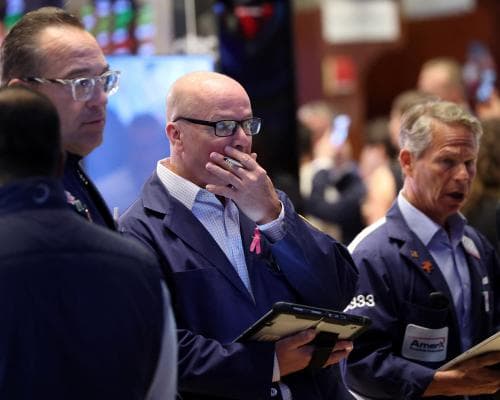
For those who navigate the world through the lens of a Bloomberg terminal, the past fortnight has offered a rare moment of suspense—a tremor in the very bedrock of modern wealth creation. When the titans of artificial intelligence stumble, even slightly, the shockwaves are felt in every private equity boardroom, every family office, and every curated art collection funded by tech dividends. But let us be clear: this is not the pop of a bubble. This is the sound of a finely tuned engine recalibrating. The ultra-wealthy understand that volatility is the price of admission to the highest echelons of returns, and what we are witnessing is a strategic recalibration, not a rout.
The facts are these: on June 22, Alphabet suffered its worst single-day market performance in over a year, triggered by a cascade of high-profile departures from DeepMind, its elite AI research unit. Within days, South Korea’s semiconductor giants, Samsung and SK Hynix, saw double-digit share declines, prompting a temporary trading halt on the Kospi index. Investors grew jittery over the companies’ combined $500 billion spending plans and whispers of softening demand for high-bandwidth memory products. Yet context is everything. The Kospi index is still up an astonishing 125% year-to-date—its strongest first-half performance since 1990. Samsung’s shares have climbed 183% since January; SK Hynix’s have soared 310%. Alphabet remains up 20% for the year. Even SpaceX, which suffered a double-digit dip despite having no direct chip exposure, is merely giving back a fraction of its recent hype. The selloff is a correction, not a catastrophe.
What this moment reveals is the exquisite fragility of scale at the apex of the market. These seven or eight companies—Alphabet, Samsung, SK Hynix, and their ilk—now constitute such a massive portion of global indices that their movements dictate the fate of entire economies. In South Korea, Samsung and SK Hynix alone account for half the value of the Kospi. In the United States, a handful of tech names represent 30% of the S&P 500. This concentration is both a source of breathtaking wealth and a point of exquisite vulnerability. The craftsmanship here is not in silicon alone, but in the architecture of capital allocation—billions deployed into memory chips, AI models, and data centers with the precision of a master watchmaker. When that precision wobbles, the entire horology of global markets trembles.
For the connoisseur of wealth, this episode signals something profound: the era of easy AI-driven gains may be yielding to a more discerning phase. The bubble talk is for the mass market; the reality is that the ultra-wealthy are now asking harder questions about which AI applications will deliver enduring value versus which are mere speculation. The dip in SpaceX’s stock, coming just weeks after its market debut, is a reminder that even Elon Musk’s aura cannot shield a company from the gravity of investor sentiment. True taste in this market is not about chasing the next big thing, but about holding assets that can weather a recalibration without losing their essential luster. The current correction is a filter, separating the merely hyped from the genuinely irreplaceable.
Looking forward, the smartest portfolios are already positioning for a bifurcated future. The AI infrastructure play—chips, cloud, and data centers—remains the bedrock, and the recent dip is a buying opportunity for those with patience and capital. Meanwhile, the consumer-facing AI applications may face a longer winter. For the billionaires’ set, the lesson is clear: diversification within tech is not optional. One does not bet the estate on a single algorithm. The correction will pass, and when it does, the holdings that survive will be those with the deepest moats—proprietary data, exclusive talent, and the kind of physical manufacturing that cannot be coded overnight. This is not a time for panic. It is a time for a very private, very deliberate recalibration of one’s exposure to the future.
The Experience
To navigate this recalibration with confidence, schedule a confidential consultation with our private wealth advisory team, who can curate a bespoke portfolio strategy for the AI-driven decade ahead.