The £4.8 Million Man: Why Severn Trent’s CEO Pay Gambit Is the Ultimate Test of Value Over Virtue
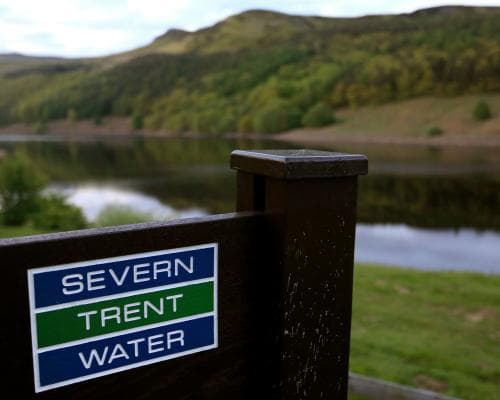
Imagine sitting in a boardroom where the topic is water—clear, vital, life-sustaining water—and the conversation turns to money. Not just any money, but a pay package that could hit £4.8 million in a single year. That’s the number on the table for James Jesic, the new chief executive of Severn Trent, a utility that serves 4.7 million customers across the Midlands, Bristol, and east Wales. The company just doubled his long-term incentive plan to £3.1 million, even as Britain’s rivers run brown with sewage and regulators slap down bonuses for environmental failures. For the ultra-wealthy, this isn’t just a corporate story. It’s a masterclass in how scarcity, talent, and risk are priced when the stakes are as elemental as the water in your glass.
The facts are stark. Jesic started in January with a base salary of £775,000. His predecessor, Liv Garfield, was one of the bosses blocked from bonuses last year because of environmental failures—a ban Severn Trent called “disproportionate” and “undermining” to leadership retention. Yet the company’s latest annual report, published in May, reveals a bold countermove: the long-term incentive plan (LTIP) jumps from 200% of salary to 400%. Add in an annual bonus capped at 100% of salary, an electric car, a £15,000 green travel allowance, and pension contributions, and Jesic’s theoretical maximum for a single year reaches £4.8 million. That’s nearly a million more than Garfield’s peak earnings in 2022. The message? Severn Trent is willing to pay a premium for the person who can steer a 4.7-million-customer ship through the storm of public anger and regulatory fury.
But here’s where the craftsmanship angle gets interesting. This isn’t a tech startup or a hedge fund; it’s a water utility. The product is as old as rain. Yet the rarity here is leadership—someone who can juggle infrastructure, environmental compliance, and shareholder returns while the entire sector is under a microscope. Severn Trent framed the pay hike as essential to “attract and retain the leadership capability required to deliver sustained improvement for customers and the environment.” In other words, when the asset is trust and the liability is sewage, you pay for the person who can keep the pipes clean and the regulators at bay. The company also quietly removed an environmental performance measure from its bonus criteria, despite being considered one of the better performers on pollution. That’s a signal: they’re betting on talent over targets.
For the luxury market, this story is a mirror. The same logic that drives a collector to pay millions for a Patek Philippe—the belief that scarcity, heritage, and craftsmanship justify the price—applies here. The product is water management, the heritage is a 150-year-old utility, and the craftsmanship is the ability to run a FTSE 100 company while sewage spills hit 36,000 incidents lasting over 200,000 hours in 2025. James Wallace of the River Action campaign group put it bluntly: “The public will rightly question whether any chief executive should receive a multimillion-pound pay package when the company they were responsible for recorded around 36,000 sewage spills.” Yet from a wealth perspective, this is about paying for the person who can turn that around. The market for top-tier utility CEOs is thin, and the cost of failure—fines, reputational damage, customer churn—is astronomical.
What does this signal about taste and the luxury market? It suggests that the ultra-wealthy are increasingly looking for value in resilience, not just glamour. A Hermès Birkin holds its worth because of craftsmanship and scarcity. A Severn Trent CEO’s pay package holds its worth because of the scarcity of leaders who can manage a crisis while keeping dividends flowing. The green travel allowance and electric car aren’t perks; they’re badges of a new kind of status—one that says, “I can navigate the intersection of profit and planet.” Jesic’s package, with its doubled LTIP and reduced annual bonus, is a bet that long-term thinking pays more than short-term wins. That’s a philosophy that resonates in boardrooms from Mayfair to Monaco.
Looking forward, this story is a canary in the coal mine for the broader luxury economy. If a utility can justify a £4.8 million pay package amid public outrage, what does that mean for the pricing of other essentials—private education, healthcare, even art? The answer is simple: value is what the market believes it can get away with. Severn Trent is betting that investors and customers will accept the price of talent, even when the product is tainted. For the ultra-wealthy, the lesson is about timing. The next time you see a headline about sewage and bonuses, remember that the same calculus applies to your own portfolio. The water may be murky, but the money is clear.
The Experience
To explore how top-tier utility leadership is valued in today’s market, book a private briefing with our wealth strategists at the World Billionaires Day summit. Access is limited to invitees with a net worth above £50 million.