The Billion-Dollar Eye: One Man’s 1,091-Day Pursuit of the World’s Rarest Luck
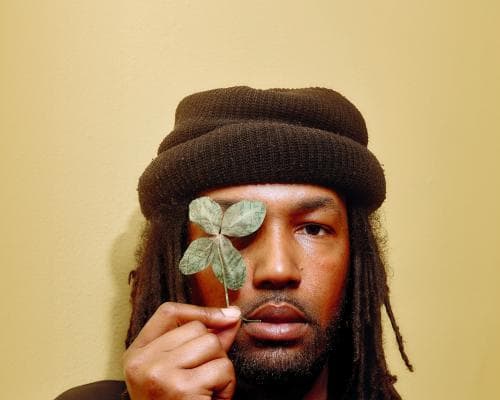
Imagine a man who wakes each morning not to a private-jet schedule or a boardroom battle, but to a patch of grass. He kneels. He scans. He finds. For 1,091 consecutive days, rapper and clover savant has pulled a four-leaf clover from the earth — sometimes 15, sometimes 100 in a single day. The odds of finding one are one in 5,000 to 10,000. He has beaten those odds more than 10,000 times. This is not a parlor trick. It is a meditation on grief, a defiance of probability, and a masterclass in the kind of obsessive focus that builds empires.
The story begins in Sumter, South Carolina — a town locals call “Murk City,” shadowed by gun violence and crime. He grew up scanning crowds for danger, not clover. But after the 28th anniversary of his father’s death, something shifted. He locked himself in his apartment, drowning in anger. Then, a pull — like a wire from his chest to his backyard. He knelt in the grass, something he’d never done, and found a single four-leaf clover. He took it as a sign: his father was at peace. So could he be. Within 12 days, he found four more. He hasn’t stopped since.
What makes this a luxury story is not the object — a clover is free — but the resource it consumes: time. He spends eight to ten hours a day hiking, scanning, collecting. He has found clovers in four states, the District of Columbia, and 15 cities. In snow, he digs. On holiday, he hunts. He dries them between heavy books, laminates them, and fills photo albums by the hundred. This is not a hobby. It is a ritual of attention. In a world where the ultra-wealthy buy time with private jets and concierge doctors, he simply decides to spend it on one thing. That kind of focus is rarer than any clover.
The clover itself is a genetic anomaly — a mutation that causes a fourth leaflet. Once a patch produces one, it’s more likely to produce more. He knows the patches. He studies clover lore. In Celtic mythology, each leaf stands for faith, hope, love, and God’s grace — luck, in shorthand. But for him, the luck is not in the finding. It’s in the looking. He gifts thousands of clovers a year to delivery drivers, waitstaff, strangers at bus stops. He hands them out like a billionaire dropping a hundred-dollar bill — not for status, but for the quiet charge of giving someone a jolt of possibility.
Skeptics question the clovers’ authenticity. He understands. “Some people can’t imagine finding one,” he says. That disbelief is the same reflex that makes a first-time buyer doubt a Patek Philippe or a Hermès Birkin: how can something so rare be real? The answer is the same. It’s real because someone decided to look. He learned to look in a place where looking meant survival. Now it means connection. His social media community of fellow collectors spans the globe. They share finds from different latitudes, different seasons. It’s a quiet network of people who believe that luck is not random — it’s a muscle.
What does this signal about wealth and taste? That the ultimate luxury is no longer a thing you own, but a way you see. A four-leaf clover is worthless on paper. But the man who finds one every day for three years has turned his life into a kind of art — a performance of patience, a refusal to let grief win. For the ultra-wealthy, who can buy anything, the rarest commodity is a story that cannot be purchased. This is one. It costs nothing. It is worth everything.
The future? He keeps looking. He keeps giving. He keeps proving that the most valuable asset in any portfolio is attention — and that the best luck is the kind you make yourself.
The Experience
To walk in his footsteps, start by spending one hour in a clover patch with no phone. Then keep looking. The luck is in the looking.