The Last Outpost: A Pilgrimage to St Kilda, Britain’s Most Remote Archipelago
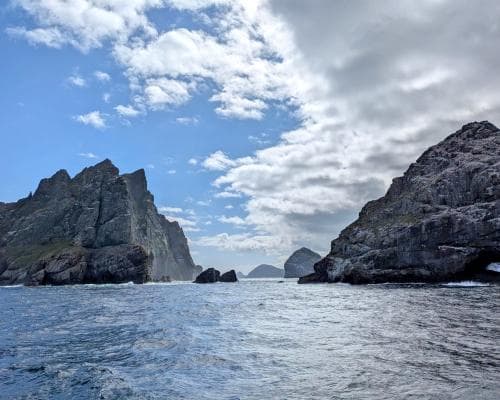
Dawn breaks over a deep-rolling ocean, the sky a watercolour wash of pearl and rose, and I am about to realise a dream that has simmered for years. Thirty-five nautical miles west of the Outer Hebrides, the expedition cruise ship M/V Sea Spirit cuts a solitary path through the Atlantic, its bows aimed at a jagged silhouette on the horizon: the archipelago of St Kilda. This is the most remote outpost of the British Isles, a place where the ordinary rules of travel dissolve, replaced by a raw, elemental encounter with land and sea. For the ultra-wealthy, whose itineraries often span the globe’s most pampered enclaves, St Kilda offers something rarer than any five-star suite: the chance to stand where few have stood, to feel the pulse of a landscape that has resisted the march of modernity.
Landing on Hirta, the largest of the four islands at a mere 2.7 square miles, is an act of privilege in itself. The sea conditions must align, the winds must soften, and the captain’s decades of experience must read the swell like a sacred text. Above the great storm beach, a thin crescent of traditional Hebridean cottages emerges from the mist—a deserted, unnamed village that seems to exhale the ghosts of its former inhabitants. Each cottage bears a simple plaque listing the last family to live there, and I pause at No. 3, home to Mary Ann and William MacDonald and their 11 children. Their names—John, Finlay, Annabella, Mary, Mary B, Finlay Jonn, Malcolm, Kirsty, Rachel, Marion, and Mae—read like a litany of survival against impossible odds. For centuries, the St Kildans adapted to this harsh isolation, scaling cliffs to harvest seabirds, enduring winters that could bury their homes in snow, until the last 36 souls were evacuated at their own request in 1930.
The landscape itself is a museum of ingenuity. Splaying out from the cottages are small, sea-turfed fields bounded by lichenised stone walls and unique beehive-shaped drystone cleits—small bothies used historically to store seabirds, eggs, crops, and peat. Today, these structures serve as “desirable residences” for nesting wheatears, whose breezy calls cut through the profound silence that blankets the island. We venture up the steep slopes of Conachair, the highest sea cliff in the United Kingdom at nearly 1,400 feet, where slight but tenacious Soay sheep graze on wind-bent grass. The sheer verticality of the cliffs, the roar of the Atlantic below, and the dizzying flights of gannets and puffins create a sensory overload that no photograph can capture. This is not a destination to be consumed; it is a place to be witnessed.
Access to St Kilda is the ultimate luxury of scarcity. Only a handful of expedition vessels, like the M/V Sea Spirit, are permitted to land passengers here, and even then, the weather dictates the schedule. The cost of such a journey—often exceeding $10,000 per person for a 10-day expedition—buys not opulence but authenticity: a Zodiac ride through crashing surf, a guided walk among ruins that predate the Vikings, and the quiet camaraderie of fellow travellers who understand that true wealth is measured in memories, not thread counts. The heritage angle is unimpeachable: St Kilda is the UK’s only dual UNESCO World Heritage site, recognised for both its natural and cultural significance, a status that ensures its protection from the very commercialisation that defines most luxury travel.
What does this signal about the future of luxury travel? It signals a shift from the curated to the elemental. The ultra-wealthy are increasingly seeking experiences that strip away the gilded layers of comfort and confront them with the sublime—whether that be Antarctica, the deep Amazon, or the remote islands of the North Atlantic. St Kilda represents the apotheosis of this trend: a place where the only amenity is the raw beauty of isolation, where the concierge is the wind and the bellhop is a gannet. The next frontier for these travellers will be even more remote—the volcanic peaks of Tristan da Cunha, the ice-locked fjords of Greenland—but St Kilda will remain a benchmark, a pilgrimage site for those who understand that the greatest luxury is the privilege of standing on the edge of the world and feeling utterly, gloriously small.

.jpg%26w%3D900%26q%3D75%26output%3Dwebp&w=1920&q=75)
