Andy Burnham’s State Expansion Push: A $4 Trillion Test for UK Asset Owners
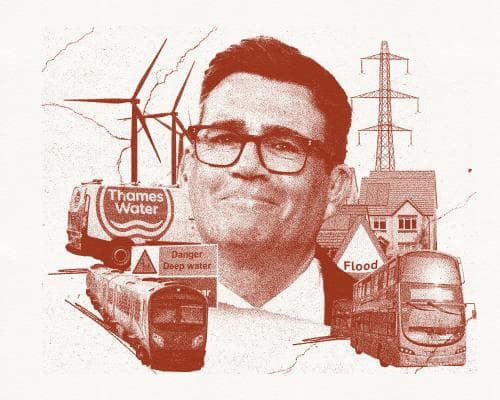
When Andy Burnham steps up to the podium in Manchester on Monday, the owners of Britain’s most entrenched capital assets will be listening with more than passing interest. The Labour mayor and prospective prime minister has spent his political career threading the needle between left-wing idealism and electoral pragmatism, but his latest rhetoric — demanding that “the essentials of life” be run for public, not private, interest — represents the most direct challenge to the current ownership structure of the UK’s critical infrastructure since the post-war nationalisations. For a wealth desk that tracks how capital is deployed and protected, this is not a policy speech; it is a potential repricing event for billions in regulated assets.
The stakes are enormous. The UK’s water sector alone carries around £60 billion in debt and equity, with companies like Thames Water already teetering under regulatory strain and political pressure. Energy networks, including National Grid’s gas and electricity transmission arms, trade at multiples that assume stable, inflation-linked returns. Transport assets, from the rail franchise system to the Bee Network that Burnham himself championed, represent a patchwork of public-private arrangements that have delivered mixed returns. If Burnham moves from “public control” — which could mean tougher regulation, price caps, or golden shares — to outright nationalisation, the market for UK infrastructure bonds and equities would face a structural repricing not seen since the privatisations of the 1980s.
The mechanics of any such shift are where the real money story lies. Burnham’s allies, including Compass director Neal Lawson, draw a critical distinction between “control” and “ownership.” Control could mean tighter oversight, mandatory reinvestment targets, or even the appointment of public-interest directors — measures that would compress margins but not extinguish equity. Ownership, by contrast, would require the state to buy out shareholders at a price determined by parliament or a tribunal, likely at a discount to current market values given the political risk premium. The choice of chancellor is the tell: Ed Miliband, the bookies’ favourite among left-wing backers, has a track record of advocating for energy nationalisation and would be willing to face down industry lobbying. Wes Streeting, the more centrist contender, has focused on EU alignment and planning deregulation — a signal that capital preservation, not expropriation, is his priority.
The numbers that matter most to investors are not in Burnham’s speech but in the balance sheets of the companies he targets. Water utilities trade at an average of 0.8 times regulated asset value, already pricing in some political risk. Energy networks yield around 5-6%, with premium for regulatory stability. If Burnham signals that nationalisation is on the table — even as a long-term aspiration — those yields will spike and valuations will compress further. For institutional investors, pension funds, and sovereign wealth funds that have piled into UK infrastructure for its predictable, inflation-linked cash flows, this is an existential question. The UK’s listed utilities have a combined market capitalisation of roughly £150 billion, and the broader infrastructure universe — including private equity-held assets — could be twice that.
What this signals for markets is a widening of the UK risk premium. For years, British infrastructure was seen as a safe harbour: regulated, transparent, and politically stable. The Burnham agenda, if implemented, would shatter that assumption. Global capital allocators are already rotating toward US and European infrastructure, where regulatory frameworks are more predictable. A move toward even partial public control would accelerate that shift, leaving domestic pension funds and retail investors holding assets that are suddenly harder to value and harder to sell. For the wealthy, the playbook is clear: reduce exposure to UK regulated utilities, hedge with inflation-linked bonds, and watch for the chancellor appointment as the definitive signal.
The forward-looking close is not about whether Burnham wins the next election — it is about the direction of travel. Even if he moderates his stance, the genie of state intervention is out of the bottle. The Conservative government’s own record on water regulation and rail renationalisation has already blurred the lines between public and private. Burnham’s speech will not trigger an immediate sell-off, but it will set the terms of debate for the next decade. For capital builders, the lesson is that political risk in the UK is no longer a footnote — it is a central variable in every infrastructure thesis. The smart money will watch Manchester closely, and act before the rest of the market catches on.


