Wimbledon's White-Hot Moment: Where Tennis Meets Tailoring in the Royal Enclosure
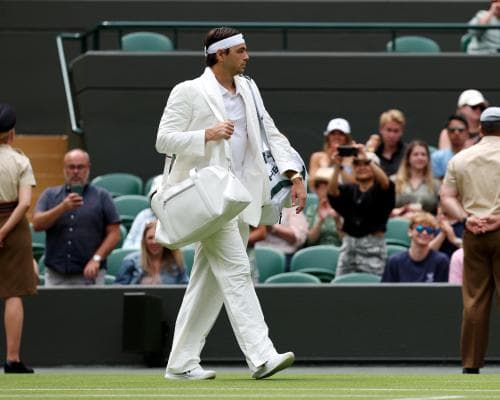
There is a particular electricity that hums through the All England Club when the grass is at its most pristine and the strawberries have been polished to a lacquered red. This year, that current was charged by a singular moment of sartorial clarity: Taylor Fritz, the No. 6 seed and America's last grand-slam finalist, stepping onto Centre Court not in the usual athlete's uniform of logo-laden sportswear, but in a bespoke all-white Boss suit draped over his tennis whites. It was a gesture that spoke volumes to the discerning eye—a declaration that at Wimbledon, the world's most hallowed tennis cathedral, style is not an afterthought but a weapon. For the luxury traveller, this is the first lesson of the season: how you arrive matters as much as how you play.
Wimbledon remains the undisputed crown jewel of the tennis calendar, a pilgrimage site for the global elite who understand that access here is the ultimate currency. The queue for Centre Court tickets is a democratic myth; the reality is a labyrinth of debenture holders, private members' clubs, and hospitality suites that cost more than a small Caribbean island. This year, the buzz is not just about the five-set thrillers—Ben Shelton's heartbreaking collapse to world No. 140 Otto Virtanen, a match that swung on a single forehand into the net—but about the spaces where the wealthy watch. The Royal Box, the Aorangi Terrace's champagne bars, and the private garden parties hosted by watch maisons and fashion houses have become the true courts of power. To be here is to witness not just sport, but a finely choreographed ballet of influence and taste.
The experience of Wimbledon for the ultra-wealthy is a study in curated immersion. The day begins not with a scramble for tickets but with a chauffeured arrival through the private gates, followed by a flute of Krug in the Champagne Lawn Pavilion. From there, the itinerary is a masterpiece of precision: a morning on Court 1 to catch the rising stars, a lunch of lobster and English asparagus in the Members' Dining Room, and an afternoon in a private box on Centre Court, where the air is thick with the scent of freshly cut grass and old money. The real connoisseurs, however, know that the magic lies in the interstitial moments—the walk through the ivy-covered walls of the old courts, the whispered deal struck over a Pimm's cup, the glimpse of a royal in the crowd. It is a journey that demands a wardrobe of equal gravitas: linen suits from Anderson & Sheppard, Panama hats from Lock & Co., and, for the bold, a white-on-white ensemble that echoes Fritz's audacious entrance.
Rarity is the oxygen of luxury, and Wimbledon offers it in spades. The tournament's debenture tickets, which grant access to the same seat for five years, trade on the secondary market for sums that would finance a small expedition to Antarctica—upwards of £80,000 per pair for Centre Court. The hospitality packages, such as those offered by Keith Prowse or the All England Club's own 'Wimbledon Experience', start at £1,500 per person per day and climb into the stratosphere for the finals. Yet the true prize is not a ticket at all but an invitation to the private events hosted by brands like Rolex, Ralph Lauren, and Laurent-Perrier, where the guest list is an invisible handshake of net worth and cultural capital. To be invited is to belong to a tribe that understands that the real match is played off the court.
What this signals about the future of luxury travel is a shift from passive spectatorship to active participation in the theatre of sport. The wealthy no longer want to simply watch tennis; they want to inhabit its world, to dress for its rituals, to be seen as part of its narrative. This is why the bespoke suit is no longer the preserve of the Royal Box—it is becoming the uniform of the discerning traveller who treats every day of a grand slam as a performance. The trend is spreading: at the French Open, private dining on the Philippe Chatrier rooftop; at the US Open, the Champagne Bar overlooking Arthur Ashe Stadium. But Wimbledon remains the gold standard, a place where the grass is still rolled by hand and the dress code is enforced with the same rigour as the line calls.
Where the wealthy go next is into the off-season sanctum of the tennis world: the private clubs and exhibition matches that dot the Caribbean and the Mediterranean. Think of the Monte-Carlo Country Club, where the clay courts are drenched in Riviera sunlight, or the private tennis weeks at Hotel du Cap-Eden-Roc, where guests trade their whites for swimwear after a morning with a former champion. There is also the rising allure of the Laver Cup, a three-day spectacle that rotates through the world's most glamorous cities—Berlin next, then San Francisco—where the hospitality is as curated as the matches. For those who have mastered Wimbledon, the next frontier is not a tournament but a lifestyle: a calendar of tennis that weaves through St. Moritz, Aspen, and the Maldives, where the court is just another room in a suite of experiences designed for those who demand the extraordinary.

.jpg%26w%3D900%26q%3D75%26output%3Dwebp&w=1920&q=75)
