The Geothermal Renaissance: How Deep Rock and Supercritical Steam Are Redrawing the Clean Energy Map
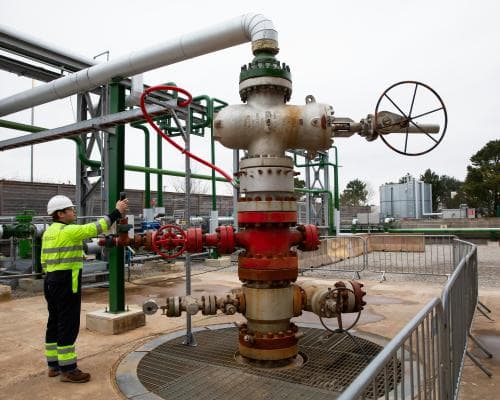
For decades, geothermal energy has been the quiet, reliable cousin of the renewables family—always present but never quite breaking through. That is changing, and the catalyst is not a new subsidy or a climate treaty, but a collision of drilling technology borrowed from the fracking boom and materials science capable of handling fluids at 400°C and pressures exceeding 200 bar. The result is a new class of enhanced geothermal systems (EGS) and supercritical geothermal that promise to transform the planet's internal heat into a dispatchable, baseload clean power source—one that runs 24/7, regardless of weather or time of day.
At the center of this shift is a quiet but accelerating race among a handful of deep-tech startups and established energy majors. Companies like Fervo Energy, backed by Bill Gates’ Breakthrough Energy Ventures, and Eavor, which has raised capital from BP and Chevron, are commercializing closed-loop and horizontal drilling techniques that dramatically expand geothermal's addressable geography. Meanwhile, in Iceland and Japan, researchers are probing the limits of supercritical geothermal—where water injected into deep wells reaches a state beyond liquid and vapor, unlocking energy densities an order of magnitude higher than conventional hydrothermal systems. The recent successes at the Iceland Deep Drilling Project (IDDP), where temperatures above 450°C were confirmed at 4.5 km depth, have turned what was once a geological curiosity into a tangible engineering target.
The capital flowing into this space is no longer experimental. According to the International Energy Agency, global investment in geothermal hit $4.5 billion in 2023, up 35% year-over-year, with a significant portion directed toward EGS and supercritical projects. The U.S. Department of Energy’s Enhanced Geothermal Shot aims to cut the cost of EGS to $45 per megawatt-hour by 2035, a price point that would undercut natural gas in many markets. Private capital is following: a consortium led by Khosla Ventures and Temasek recently closed a $300 million round for a startup advancing plasma-based drilling bits capable of penetrating granite at twice the speed of conventional rotary drills. The message is clear: geothermal is no longer a niche play but a scalable infrastructure bet.
Competitively, geothermal's value proposition is its dispatchability. Solar and wind, despite falling costs, still face intermittency challenges that require massive battery storage or backup gas plants. Geothermal offers a firm, carbon-free output that can operate at capacity factors above 90%—rivaling nuclear without the waste or permitting headaches. This positions it as the missing piece in deep decarbonization, particularly for industrial heat and data center loads that demand 24/7 power. The market context is also shifting: as hyperscalers like Microsoft and Google face pressure to match their AI-driven energy demand with clean, round-the-clock electrons, geothermal is emerging as a credible alternative to colocating with nuclear plants.
What this signals for the broader clean energy sector is a strategic pivot away from the tyranny of intermittency. The next decade will likely see a convergence of geothermal with direct lithium extraction (DLE) from geothermal brines, creating a dual-revenue model that produces both clean power and battery-grade lithium—a synergy that could reshape the economics of both industries. Policymakers in the EU and the U.S. are beginning to offer production tax credits and risk-sharing mechanisms for geothermal exploration, mirroring the early support that catalyzed the solar boom.
Looking forward, the critical inflection point will be the first commercial-scale supercritical geothermal plant, expected around 2028 in Japan or the Pacific Ring of Fire. If successful, it will unlock a virtually limitless resource base: the heat beneath our feet contains orders of magnitude more energy than all known fossil fuels combined. For the billionaires and sovereign funds now placing their chips on this technology, the bet is not merely on a cleaner grid, but on a fundamental redefinition of what energy abundance looks like in a post-carbon world. The steam rising from these deep wells may well carry the future of industrial civilization with it.
More in INNOVATION

The $1.3 Trillion Exodus: How America’s Community Bankers Are Fighting to Keep Rural Wealth From Vanishing Into Crypto’s Black Hole

The Next Frontier in Crypto Crime: Predatory Seed-Phrase Recovery Scams Signal a Darker Fintech Underbelly

The Sovereign Mind: OpenAI’s GPT 5.6 Sol and the New Geometry of Power