Trump’s $2B Crypto Haul Redefines the Presidency as a Personal Hedge Fund
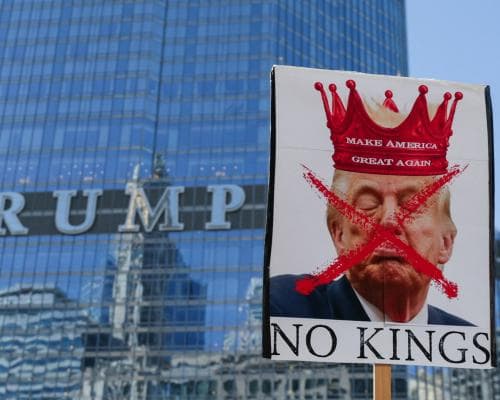
Donald Trump is not known for his reverence for the US constitution. But in his second term, he is doubling down on a claim from his first: that Article 2 grants him “the right to do whatever I want as president.” This is, to put it mildly, an extremely unusual interpretation of executive power. Yet it is the thread that draws together the headlines dominating recent days — a spate of Supreme Court rulings mostly to his benefit, and the revelation that he has raked in $2 billion since returning to office, half of it from cryptocurrencies. For investors and capital allocators, this is not a political sideshow; it is a structural shift in how the world’s most powerful office interacts with markets.
The 927-page document released Tuesday by the US Office of Government Ethics lays bare a dizzying array of income streams — not only from golf courses and Trump-branded bibles, but also from crypto, which he has relentlessly promoted, and lucrative overseas deals. Tribute flows from foreign nations, and on Wednesday he took his first flight on a Boeing 747 gifted by Qatar. The White House claim that there is no conflict of interest over his enrichment is the corollary of his belief that there is no significant distinction between Trump the 47th president and Trump the man. This is a wealth event of unprecedented scale: a sitting president personally pocketing $2 billion in under a year, with half tied to a volatile asset class he can influence with a single tweet or executive order.
The mechanics are as brazen as they are lucrative. Trump’s crypto ventures — including his own token and stakes in various digital asset platforms — have surged as he has championed a pro-crypto regulatory agenda, including a promised strategic bitcoin reserve and friendly SEC appointments. The $1 billion from crypto alone represents a direct monetization of political power: every policy signal or court ruling favorable to digital assets inflates his personal holdings. Meanwhile, the other $1 billion flows from traditional Trump Organization assets — golf resorts, licensing deals, and foreign government patronage — all of which benefit from the aura of the presidency. The key players are not just Trump and his family but a network of enablers: crypto exchanges, foreign sovereign wealth funds, and private equity firms that see access to the Oval Office as a portfolio multiplier.
What makes this story extraordinary for wealth builders is its rarity. Max Weber wrote that the bureaucracy of the modern state “segregates official activity from the sphere of private life,” with relationships administered according to rules rather than “individual privileges and bestowal of favour.” Trump has turned the clock back, reinventing the modern executive as a feudal court where office holding is a source to be exploited for rents and emoluments. The heritage of American governance — a system designed to prevent exactly this kind of self-dealing — is being dismantled in real time. The price angle is stark: the president’s personal net worth is now directly tied to his policy decisions, creating a conflict of interest that no modern democracy has ever faced at this scale.
For markets, this signals a new regime of political risk and reward. The Supreme Court sometimes rejects Trump’s maximalism — as it did this week in rebuffing his attempt to fire Federal Reserve governor Lisa Cook without cause — but far too rarely, and often only when it affects Wall Street directly, as with tariffs. The implication is clear: sectors aligned with Trump’s financial interests — crypto, real estate, defense, and any industry where foreign tribute can flow — may see outsized gains, while those that cross him face regulatory retaliation. The wealthy are already adapting, with family offices and hedge funds increasing allocations to digital assets and Trump-linked SPACs, while shorting sectors that draw his ire. This is not about politics; it is about following the money trail back to the source of power.
Looking forward, the key question for capital deployers is whether this model is sustainable or a bubble waiting to pop. If Trump’s crypto holdings collapse — say, from a market downturn or a regulatory backlash from a future administration — the personal incentive to prop up digital assets could distort policy for years. Conversely, if the $2 billion haul continues to grow, it sets a precedent that every future president could exploit, eroding the firewall between state and private wealth. For now, the smartest capital is hedging: betting on crypto while maintaining exposure to traditional assets that benefit from a weakened rule of law. The medieval court is open for business, and the markets are its most faithful subjects.
More in MONEY
Trump’s USMCA Ultimatum: Annual Reviews Threaten $2 Trillion in North American Trade — and the Wealth Built on It
The New Cost of Comfort: Why Britain’s Energy Crisis Redefines the Value of Resilience
Australia’s Hottest June in Decades Signals Rising Climate Risk Premium for Coastal and Agricultural Assets