The £250 Million Gateway to Byron’s Pool: Cambridge South Station Reimagines Rural Access for the Discerning
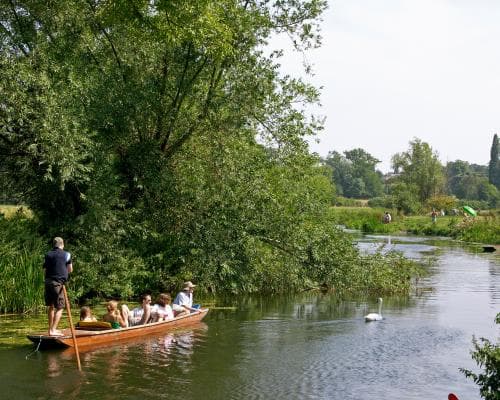
For those who measure life in moments of unmediated beauty, the greatest luxury is not a private jet or a superyacht—it is the ability to step from a pristine platform into a landscape that has barely changed since Lord Byron swam its reedy waters. On June 28, Cambridge South station opens its doors, a £250 million masterstroke of infrastructure that does not simply connect a city but unlocks a private Eden for the world’s most demanding travelers. This is not a commuter hub; it is a portal to a pastoral aristocracy that has, until now, been inaccessible to anyone unwilling to brave the congestion of cobbled alleys and gridlocked roads.
The facts are as precise as a bespoke tailor’s stitch. Cambridge South, the first Great British Railways-branded station, sits adjacent to Europe’s largest biomedical campus—a 40,000-visitor-a-day colossus of scientific ambition. Yet its true value lies in what lies beyond its solar-paneled roof and 1,000-cycle parking spaces. Within a mile, flat fields of poppies and ox-eye daisies stretch to a horizon broken only by skylarks and the distant call of a cuckoo. This is the setting for Byron’s Pool, a nature reserve where the poet once swam and where Charles Darwin surveyed beetles. The station’s living roof and sustainable design are not mere green credentials; they are a statement of intent for a clientele that expects its transport to be as tasteful as its wardrobe.
The craftsmanship here is not in steel or glass but in heritage and rarity. The path from the station leads through flowering meadows to Trumpington, where the village church holds one of England’s oldest brass monuments—Sir Roger de Trumpington, lying in full chain mail with a lion-clawed dog biting his broadsword, dating to 1289. Just south, archaeologists unearthed a young Anglo-Saxon woman wearing a gold-and-garnet cross, a piece that would command a seven-figure sum at auction today. This is the kind of provenance that money cannot buy, yet the station makes it accessible in under twenty minutes on foot. The new art trail, bat safaris by punt, and the Cambridge University Botanic Garden—at its fragrant peak with sage, lemon balm, and lavender—offer a curated sensory experience that rivals any private collection.
For the ultra-wealthy, this signals a shift in the luxury market toward experiential exclusivity rooted in place. The congestion that plagues Cambridge’s medieval core is a barrier that the new station dismantles with quiet elegance. No car, no driver, no helicopter—just a walk through reedy water where sun glints off waterlilies and moorhens paddle. This is not a destination for Instagram influencers; it is a sanctuary for those who understand that true status is the ability to command time and space without spectacle. The station’s design—a model of sustainable transport—whispers a new kind of wealth: one that values preservation over ostentation, and access over ownership.
Looking forward, Cambridge South positions itself as a prototype for the future of luxury travel. As climate consciousness reshapes the portfolios of the elite, the demand for low-impact, high-authenticity experiences will only grow. This station offers a template: a £250 million investment that yields not just convenience but a return on cultural capital. For the discerning traveler, the next journey is not to a new hotel but to a meadow where a poet once swam, accessible by a train that leaves no trace. The bat safaris, the art trail, the botanic garden—these are not amenities; they are the new currency of a life well lived.
The Experience
To experience this exclusive portal, book a first-class ticket to Cambridge South on June 28 and arrange a private punt safari through Grantchester Meadows with a naturalist guide—contact our concierge for bespoke itineraries.


