The 70-Second Takedown: Why Summer Travel for the Ultra-Wealthy Now Demands a New Playbook
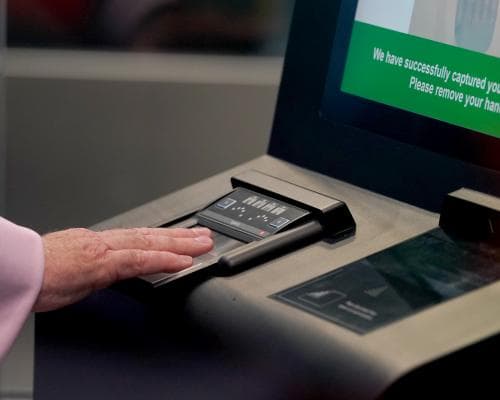
Imagine this: You’ve secured a private suite at a white-sand resort in Mallorca. Your Gulfstream is fueled. Your schedule is a masterpiece of efficiency. Then you hit a wall of humanity at passport control. A 70-second fingerprint scan per person—multiplied by hundreds of restless travelers—turns your seamless escape into a humid, slow-motion nightmare. This isn’t a dystopian fever dream. It’s the reality of Europe’s new Entry/Exit System (EES), and it is about to make this summer the most frustrating season in recent memory for anyone who values time as the ultimate currency.
Ryanair, Europe’s largest airline, has sounded the alarm. They’re calling the rollout “half-baked” and warning that passengers are being used as “guinea pigs.” The European Commission has called an emergency meeting for next Tuesday, but the damage may already be done. The EES—a decade in the making—requires non-EU travelers to register fingerprints and facial images on first entry into the Schengen zone, then verify those biometrics at every subsequent border. The EU says it takes 70 seconds per person. That’s 70 seconds of friction for every traveler, every time. For the ultra-wealthy, whose entire travel architecture is built on speed and privacy, those seconds compound into hours of queue chaos at seven already-stressed airports: Tenerife South, Palma, Alicante, Málaga, Milan Bergamo, Krakow, and Paris Beauvais. Industry groups are begging for a suspension through August, or even a full year.
But here’s the real story for the discerning traveler: the problem isn’t the technology. It’s the herd. The EES was designed to give the EU better visibility over who enters and leaves the Schengen area—a noble goal. But it was implemented without the infrastructure to handle peak summer volumes. The EU has recorded over 100 million entries and exits so far, with an estimated 200 to 300 million annual crossings. France, Italy, and Greece aren’t even fully onboard yet. The result? A system that treats a billionaire and a backpacker as identical data points. The luxury traveler’s nightmare is not the fingerprint itself—it’s being caught in a queue designed for mass processing, with no bypass. The EU says airports can suspend checks in July and August if queues build up, but that’s like telling a chef to stop cooking when the kitchen is on fire.
This moment signals a profound shift in what wealth and taste demand from travel. For decades, private aviation and first-class lounges insulated the elite from the indignities of commercial travel. But biometric border controls don’t respect cabin class. The new luxury is not a seat—it’s a system. The ultra-wealthy are now investing in bespoke travel concierges who pre-clear biometrics, schedule arrivals during off-peak windows, and maintain relationships with airport directors who can open a secondary lane. The real status symbol this summer won’t be a Patek Philippe or a Hermès Birkin. It will be the ability to walk from curb to gate without a single pause for a fingerprint scanner.
Looking ahead, this crisis is a catalyst. The EU will eventually refine the system, but the damage to the summer of 2025 is already baked in. For those who can afford it, the solution is not to fight the system—it’s to outmaneuver it. The smartest money is already moving toward private terminals (FBOs) that handle border formalities before you even step out of your car. Some are exploring yachts as primary summer transport, bypassing Schengen airports entirely. Others are simply shifting their European holidays to autumn, when queues thin. The lesson is clear: when the system fails, the truly wealthy don’t complain. They rewrite the itinerary.
The Experience
Book a private aviation consultation that includes biometric pre-clearance and dedicated FBO access at all seven impacted airports—your summer escape deserves a zero-queue guarantee.