The Last Frontier’s Last Supper: Fairbanks Unveils Its Unexpected Culinary Soul
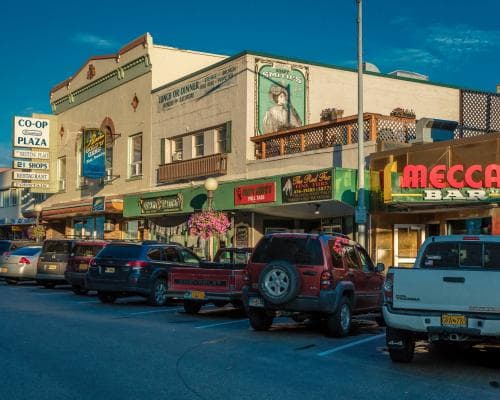
In the rarefied world of luxury travel, the greatest prize is often the story no one else has tasted. Fairbanks, Alaska—a city of 31,000 souls, six hours inland from Anchorage, and best known as a launchpad for Arctic expeditions and northern lights pilgrimages—has quietly cultivated a culinary scene that defies every expectation. Here, where the permafrost meets the jet stream, a Thai couple named Charlie Boonprasert and Tutu Navachai arrived in the 1980s, lured by the promise of gold and a kitchen. They found a small Thai community starving not just for pad thai, but for connection. In 1989, they opened Thai House, a hole-in-the-wall that today, under the stewardship of Charlie’s wife Laong, serves gai yang and tom yum kung that taste of northern Thailand—but with a gentler spice, as if the Arctic air itself has mellowed the heat. This is not a restaurant for the Michelin-star set; it is something far more precious: an authentic thread in a tapestry woven by migrants, dreamers, and survivors.
The significance of Fairbanks as a culinary destination lies in its very isolation. Alaska’s geography has long discouraged the corporate restaurant chains that homogenize the lower 48; the cost of shipping frozen burritos across tundra and mountain passes is prohibitive for all but the most determined. Instead, a mosaic of independent, family-owned eateries has filled the void. Crepes from a French-trained chef who followed a trapper north. Empanadas from a Chilean family who came for the pipeline boom. Moldovan placinte from a grandmother who missed the taste of her village. Korean bibimbap, Japanese ramen, Cuban ropa vieja—Fairbanks has become a culinary United Nations, its menus a map of the world’s migrations. For the discerning traveller, this is not mere diversity; it is a living archive of human resilience, served on a plate.
What makes this scene truly extraordinary for the luxury traveller is the access it provides to a vanishing kind of authenticity. In an era when the ultra-wealthy can helicopter into a private island or book a chef’s table at a three-star restaurant, the rarest commodity is the unscripted encounter. At Thai House, you might sit next to a gold miner just in from the claim, a university researcher studying permafrost, and a family from Bangkok who heard about the restaurant from a cousin. The price of a meal is negligible—a fraction of what one might spend on a single cocktail in St. Barts—but the value is immeasurable. This is the kind of place where the owner remembers your name after one visit, where the recipes are not written down, and where the story of how the restaurant survived its first winter is passed from patron to patron like a secret.
The rarity of this experience is heightened by Fairbanks’s own contradictions. It is a city built on boom-and-bust economies—gold, oil, military—and its population ebbs and flows with the seasons. The northern lights, visible here more than 200 nights a year, draw the wealthy in winter, but the culinary scene hums year-round, a constant in a landscape of extremes. For those who have chartered a private jet to see the aurora, the real revelation is not the green sky but the red curry at Thai House, or the Moldovan cabbage roll at a diner that looks like it was airlifted from a Soviet-era postcard. The price of such a journey? A few thousand dollars for the flight, a few hundred for the accommodation, and the humility to let go of the itinerary.
This signals a broader shift in luxury travel: the move away from performative opulence toward narrative depth. The ultra-wealthy are increasingly seeking places that offer not just comfort but context—destinations where the story is as rich as the thread count. Fairbanks, with its unlikely culinary mosaic, represents the frontier of this trend. It is not a place for the passive traveller; it demands curiosity, a willingness to eat at a Formica counter, and the understanding that the best meal of your life might come from a kitchen run by a grandmother who crossed an ocean for gold.
Where do the wealthy go next? After Fairbanks, they will follow the food. The lesson of this Alaskan interior is that the most luxurious experience is often the least expected: a meal that connects you to a place, its people, and its history in a way that no five-star restaurant can. For those who have seen the northern lights from a glass-domed lodge, the next frontier is the taste of a community that built itself from scratch. Fairbanks is not a detour; it is the destination—if you know where to look.


