The $1 Deals That Could Rob Abuse Survivors of Justice
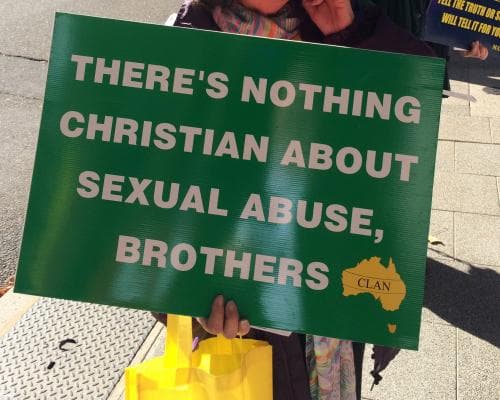
In 2007, the Christian Brothers did something that looked, on paper, like a generous gift. They handed over control of their schools to a new independent entity, Edmund Rice Education Australia. The price tag for each property? One dollar. A Sydney home worth millions. A school campus. A patch of land where children once played. All for the cost of a cup of coffee.
Now, years later, that same Catholic order stands before the New South Wales Supreme Court and says it is broke. It cannot pay the $774 million it owes to survivors of child sexual abuse. The court has granted a moratorium on all abuse claims while the Christian Brothers propose a scheme to sell off its remaining 36 properties—worth $216 million—and split the proceeds among creditors. But the government’s lawyers have raised a deeply uncomfortable question: Did the Christian Brothers knowingly transfer assets to avoid paying survivors?
The Christian Brothers are not a faceless corporation. They are a Catholic religious order that, for decades, ran schools across Australia where priests and brothers systematically abused children. The Royal Commission into Institutional Responses to Child Sexual Abuse documented the horror in excruciating detail. The order’s own records show it knew about the abuse and covered it up. Now, the same institution that promised to care for the vulnerable is asking a court to protect its remaining property from those it harmed.
The mechanics of the transfers are staggering. Property records obtained by The Guardian show that between 2007 and 2017, the Christian Brothers moved land, school buildings, and homes to EREA for $1 each. The Australian Financial Review reported that the total value of these transfers was $891 million at the time, and may now be worth $2 billion. EREA, named after the order’s founder, was set up as an independent entity to run the schools. But the government’s lawyers argue that the timing and price suggest something more troubling: a deliberate strategy to place assets beyond the reach of abuse survivors.
Sera Mirzab, the barrister representing the federal government, told the court it was “obviously disturbing” if the transfers were designed to deprive survivors of compensation. The Christian Brothers deny any impropriety, insisting the transfers were legitimate and that EREA was created to ensure the schools’ future. But the survivors and their lawyers are not convinced. They point out that the order waited until it was facing a flood of civil claims before seeking the moratorium. They ask: If the transfers were above board, why sell prime real estate for pocket change?
The broader impact of this case extends far beyond Australia. It is a test of whether religious institutions can use corporate structures to escape moral and legal obligations. The Christian Brothers’ argument—that they are now too poor to pay—echoes a familiar pattern in abuse scandals worldwide: the church pleads poverty while holding assets in trusts, foundations, and sister organizations. If the court allows this moratorium to stand, it could set a precedent that encourages other institutions to hide wealth behind paper-thin legal entities.
For the survivors, this is not about money. It is about acknowledgment. It is about an institution that once held power over their childhoods finally taking responsibility. One survivor, who spoke to reporters outside the court, said simply: “They sold our pain for a dollar.” The Christian Brothers’ proposal would divide the remaining $216 million among creditors, but survivors fear they will be left with pennies on the dollar. The government has asked the court to scrutinize the transfers and possibly undo them.
This is not a story about a generous philanthropist. It is a story about the opposite: a wealthy institution that appears to have used legal loopholes to shield itself from accountability. But it is also a story about the resilience of survivors who refuse to be silenced. They have waited decades for justice. They will wait a little longer while the court decides whether a $1 sale can erase a $774 million debt.