Supreme Court Rewrites Border Economics: Asylum Metering Ruling Reshapes Labor Supply and Sovereign Risk Premiums
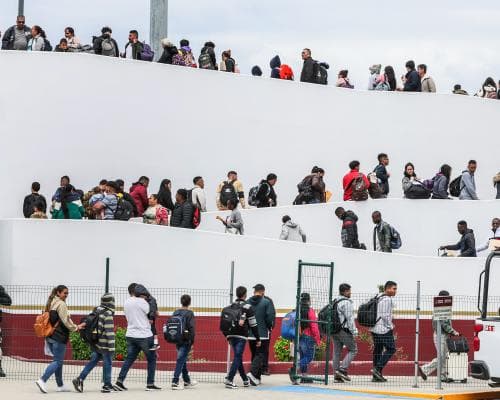
The Supreme Court just handed the Trump administration a legal crowbar to pry open the US asylum system, and the capital markets are already pricing in the aftershocks. At issue is the so-called 'metering' policy—a mechanism that allows federal agents to physically prevent asylum seekers from crossing the border before they can file a claim, effectively nullifying the statutory right to seek protection at ports of entry. The 6-3 ruling, with Justice Alito writing for the conservative majority and Justice Sotomayor dissenting in a blistering 35-page opinion, doesn't just settle a semantic dispute over the word 'in.' It rewrites the economics of border enforcement, and that has real portfolio implications for anyone with exposure to US labor markets, municipal debt in border states, or logistics assets tethered to the southern corridor.
The decision is a direct wealth event for industries that rely on a steady flow of migrant labor—agriculture, construction, hospitality, and meatpacking. The metering policy, if fully revived, will reduce the number of asylum seekers who can enter the country to work legally while their claims are processed. That means tighter labor supply in an already low-unemployment environment. For investors holding long positions in Tyson Foods or Darden Restaurants, this is a cost-side headwind. For those shorting low-wage labor proxies or betting on wage inflation, it's a tailwind. The mechanics are straightforward: fewer entrants, higher marginal labor costs, compressed margins for employers who cannot automate. The dissent's warning that the ruling allows the government to 'circumvent laws protecting asylum seekers' is also a signal to bond buyers—municipal issuers in Texas, Arizona, and California now face higher social service costs and potential legal liabilities, which could widen credit spreads on their general obligation debt.
The numbers here are not trivial. The US Customs and Border Protection reported over 2.4 million encounters at the southwest border in fiscal 2023, a figure that dwarfs pre-pandemic levels. Even a 20% reduction in asylum claims due to metering could shift the labor supply balance in sectors that account for roughly 8% of US GDP. Meanwhile, the legal battle over the word 'in' has already cost taxpayers millions in litigation fees, and the ruling invites further challenges over due process and statutory interpretation. The rarity of a 6-3 ideological split on a procedural question underscores the high stakes: the majority's textualist approach clashes with the dissent's purposive reading, but for capital allocators, the only question is how the policy will be enforced and at what speed. The Alito opinion's focus on 'ordinary speech' is a lawyer's victory; the market's focus is on the flow of people, and that flow just got a choke point.
For the wealthy, this ruling is a reminder that political risk in the US is not confined to tax rates or tariff schedules. The border is a capital asset—a gateway for human capital that directly influences wage inflation, housing demand, and consumer spending patterns. Hedge funds that have been shorting Mexican peso or long US agriculture futures will need to reassess their assumptions. Private equity firms with portfolio companies in labor-intensive sectors should stress-test their cost models for a 10-15% reduction in available immigrant labor. And family offices with real estate holdings in border cities like El Paso or San Diego should watch for shifts in rental demand and property tax bases.
Looking forward, this decision does not close the book; it opens a new chapter in the legal and regulatory battle over immigration. Expect state-level lawsuits, congressional pushback, and a flurry of emergency motions. For markets, the trend is stable but with a pronounced upward bias in labor costs and a downward bias in border-state municipal bond yields relative to Treasuries. The smart capital will watch the enforcement timelines and adjust accordingly. In a world where labor is the scarce factor, the Supreme Court just made it scarcer.


