The Art of the Warm-Up: Rocío Molina’s Calentamiento and the Discipline of Beginning Again
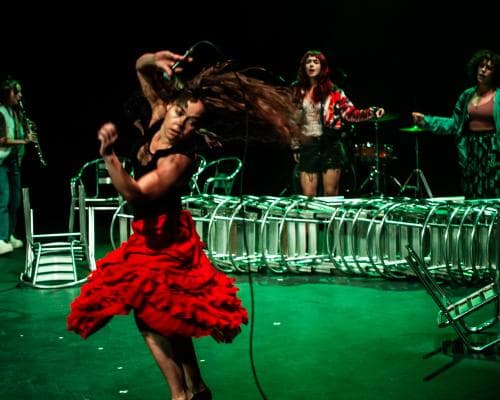
There is a certain romance in the idea of the finished product—a perfectly polished watch, a flawless performance, a life curated down to the last detail. But the ultra-wealthy know that what separates the merely expensive from the truly exceptional is not the final flourish but the discipline of the beginning. Rocío Molina, the Spanish flamenco dancer who has spent two decades dismantling and rebuilding her art form, understands this better than most. In her latest work, Calentamiento—Spanish for 'warming up'—she invites her audience into the sacred, often hidden space of preparation, where genius is not born but painstakingly assembled, beat by beat, step by step.
Calentamiento is not a performance in the traditional sense; it is a revelation of process. Molina begins before the house lights dim, her heels and toes hammering out a 12-beat phrase she has repeated since the age of seven. At 140 beats per minute, she calls this 'slow.' The audience watches, transfixed, as she builds a cathedral of sound from the most elemental of materials: the strike of wood against floor, the sharp exhale of breath, the silence between counts. This is not mere dance; it is horology in motion—a precise, calibrated mechanism where every component must align with unerring accuracy. For the collector who appreciates the painstaking assembly of a Grande Complication or the hand-finishing of a movement’s anglage, Molina’s ritual offers a parallel kind of reverence: the beauty of the repetitive, the sacredness of the routine.
What elevates Calentamiento from a curiosity to a masterclass is Molina’s willingness to expose the vulnerability behind the virtuosity. She asks for a cigarette, she chats with the audience, she confesses that she is 'getting acquainted with the pain' as she pushes her tempo to 180 beats per minute. This is not the polished, impenetrable façade of a prima ballerina; it is the raw, unfiltered reality of a craftsman at the bench. In the world of luxury, where bespoke tailoring, hand-stitched leather, and artisanal ceramics command premium prices, the value lies not in the object itself but in the invisible hours of labour that produced it. Molina’s performance is a living metaphor for that principle. Her steel core—a phrase she uses to describe her balance—is the same core that drives a Patek Philippe master watchmaker to spend months on a single perpetual calendar.
The market for such authenticity is voracious. Today’s discerning collector no longer seeks mere status; they seek narrative, provenance, and the intangible aura of mastery. Molina’s Calentamiento offers all three. It is a piece that cannot be replicated, a moment that exists only in the live encounter, much like a unique timepiece or a limited-edition hypercar. The purists may argue that what she does is 'not flamenco,' just as some traditionalists once dismissed quartz movements or avant-garde architecture. But the most sophisticated tastemakers know that true innovation is born from the deepest respect for tradition. Molina’s radicalism is rooted in her classical training; her rebellion is a form of reverence. For those who collect not just objects but experiences—a private viewing of a Rothko, a dinner cooked by a three-Michelin-star chef in your own home—Calentamiento represents the ultimate luxury: access to the creative process itself.
What does it signal about luxury taste to attend a performance that begins before the audience is seated, that asks you to witness the sweat and repetition behind the art? It signals a sophistication that transcends the superficial. It says that you understand the difference between a watch that tells time and one that embodies time. It says you value the journey over the destination, the warm-up over the finale. In an age of instant gratification, Molina’s insistence on the slow, deliberate, painful act of beginning again is a quiet rebellion—a reminder that the most exquisite things in life are those that demand patience, attention, and a willingness to start over.
As the final beats of Calentamiento fade, the audience is left not with a climax but with a question: What does it mean to keep beginning so that it never ends? For Molina, the answer lies in the endless loop of practice, the daily return to the barre, the relentless pursuit of a perfection that can never be fully attained. For the collector, it is a call to value the process as much as the product. In a world that prizes the finished, the polished, the ready-to-wear, Rocío Molina offers something far rarer: the privilege of witnessing the work that makes the masterpiece possible. And for those with the discernment to appreciate it, that is the most luxurious gift of all.


