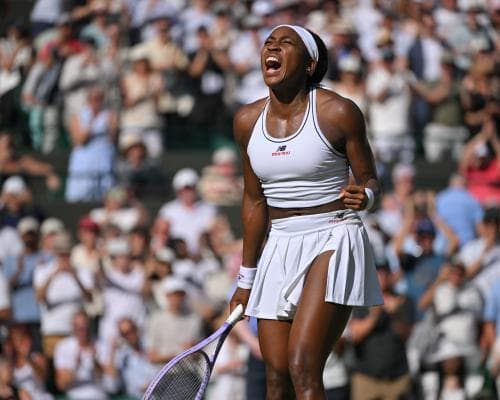
Wimbledon’s Final Act: Krejcikova’s Wrist and Andreeva’s Nerve
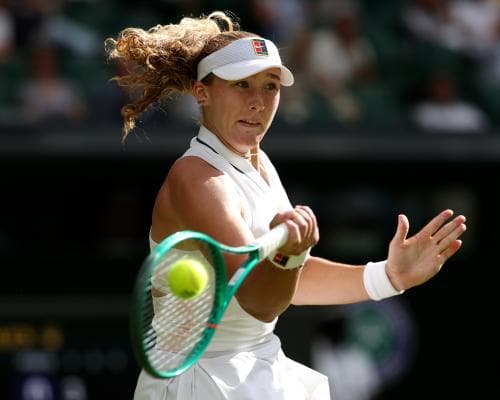
There is a particular quality of light that falls on Centre Court in the final days of Wimbledon—golden, honeyed, almost liquid. It is the same light that has illuminated the finest chapters of tennis history, and on this afternoon, it caught the arc of Barbora Krejcikova’s racquet as she unfurled a backhand volley winner that seemed to hang in the air like a held note. This was not merely a point; it was a signature. For those of us who collect not objects but moments of transcendent precision, Krejcikova’s all-court game—her ability to shift from defence to attack with the fluidity of a fine calibre movement—offered a reminder that the most rarefied performances are those that blend power with grace.
To watch Krejcikova navigate the final games is to understand the value of true craftsmanship. She brought up a fourth match point with a long, patient rally that pulled Andreeva left and right, only to dispatch a winner with the kind of clean, economical stroke that a watchmaker might envy. When the French Open champion missed an inside-in forehand on the fifth match point, Andreeva accelerated to her right and pinged a forehand passing winner down the line—a shot of such audacity that the crowd gasped. The young Russian, already a Grand Slam winner at nineteen, was dragging Krejcikova across the baseline like a master jeweller testing the tensile strength of a chain. Yet Krejcikova held, serving two aces to reach 40-0, only to see three match points evaporate in a flurry of forehand errors and a double fault. The drama was not in the outcome but in the tension between control and chaos—a quality that defines the most coveted timepieces, where every gear must mesh under extreme duress.
This match matters to the collector because it reveals the architecture of greatness under pressure. Krejcikova’s wrist—that subtle, almost invisible articulation that guides the racquet through the ball—is the same mechanism that separates a Patek Philippe minute repeater from a mere chronograph. The way she moved forward to dispatch that backhand volley, the way she read Andreeva’s body language, the way she reset after each missed opportunity: these are the hallmarks of a performer who has honed her instrument to a level of refinement that cannot be taught. Andreeva, for her part, displayed a nerve that belied her years, forcing deuce after deuce with a forehand passing winner that felt like a strike of lightning. In the world of high horology, such resilience is the equivalent of a tourbillon—a complication that resists gravity, that keeps time even when the world tilts.
The market for such moments is, of course, intangible. But the parallels to the watch world are inescapable. Just as a rare vintage Patek Philippe ref. 1518 commands attention for its perpetual calendar and moon phase, so too does Krejcikova’s performance command respect for its emotional and technical depth. Collectors who were ringside—or watching from their private boxes with a glass of Krug—understood that they were witnessing a piece of history being assembled in real time, one stroke at a time. The match point that never came, the double fault that undid a perfect game, the smile of coach Conchita Martínez despite being frozen out: these are the imperfections that make a masterpiece human, and therefore priceless.
What this signals about luxury taste is a shift away from the merely expensive toward the genuinely rare. The ultra-wealthy no longer collect only objects; they collect experiences that demand a connoisseur’s eye. A Wimbledon final that swings between match point and deuce, between a 19-year-old’s audacity and a champion’s composure, is the kind of spectacle that cannot be bought—only witnessed. It is the equivalent of a unique piece from a maison like F.P. Journe, where the value lies not in the gold but in the story engraved on the movement.
Looking forward, the legacy of this match will be its tension—the way it held the crowd in a state of suspended animation for those final games. For the collector who values the ephemeral, this is the ultimate acquisition: a memory that will be replayed in the mind’s eye like a favourite chronograph’s sweep hand, always moving, always precise. Krejcikova and Andreeva did not just play tennis; they composed a piece of living art, and those who were present will carry it with them like a rare calibre, ticking softly beneath the cuff.