The 1,000-Kilogram Neighbour: Why Tasmania’s Most Charismatic Resident Is a Seal Named Neil
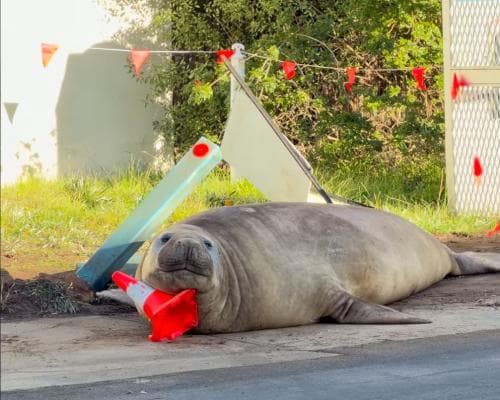
There is a certain breed of luxury that cannot be bought, commissioned, or reserved. It arrives unannounced, a force of nature that recalibrates the very definition of presence. In the hamlets of southern Tasmania, that force goes by the name Neil — a 1,000-kilogram elephant seal who has, over the past five years, become the region’s most talked-about resident. He does not wear bespoke tailoring or pilot a private jet. He simply appears, heaves his colossal frame onto a quiet road, and, with the insouciance of a trust-fund scion, blocks traffic, crushes fences, and treats parked LandCruisers as though they were oversized chew toys. The locals adore him.
Neil is a southern elephant seal, born in 2020 on a stretch of Tasmanian coastline that is more accustomed to sheep than sea monsters. At five years old, he is still an adolescent — a fact that becomes terrifyingly clear when you consider that adult males routinely surpass two tonnes, with the largest topping three and a half. For now, Neil is merely a thousand kilos of muscle, blubber, and mischief. He has been known to bypass barricades, bash into cars, and lie in the middle of asphalt as though it were a private beach. Mayor Rod Macdonald of the Tasman council describes him with a mixture of exasperation and affection: “He’s probably not the fastest mover, but if he runs into a car or decides to put his nose up on the bonnet, it’s not going to be too good.” Yet the community has embraced him as a celebrity — a living, breathing emblem of the wild that refuses to stay at arm’s length.
What makes Neil so compelling, beyond his sheer physicality, is the craftsmanship of his existence. Elephant seals are masterpieces of evolutionary engineering: they can dive to depths of over 1,500 metres, hold their breath for up to two hours, and navigate the Southern Ocean with a precision that makes GPS look quaint. On land, they are ungainly, almost comical — but that is precisely their genius. Neil’s annual return to Tasmanian towns is not a nuisance; it is a seasonal event that draws onlookers the way a limited-edition hypercar draws collectors. He is, in the words of independent senator Jacqui Lambie, “the only bloke in Tasmania who can stop traffic, ignore everyone, and still be loved for it.” That kind of unearned charisma is rare in any species.
For the ultra-wealthy collector of experiences, Neil offers something that no concierge can procure: a front-row seat to the untamed. The market for such encounters has never been stronger. From Antarctic cruises that cost six figures to private game reserves in Botswana, the affluent are increasingly spending on proximity to raw, unmediated nature. Neil is the antithesis of a curated safari — he chooses his own stage, writes his own script, and demands nothing but patience and awe. Dr Jane Younger, a seal expert at the University of Tasmania, notes that Neil’s behaviour is entirely normal for his species. “He’s come back every year since he’s been born, but he’s bigger now,” she says. “He’s broken fences, he’s harassing people’s cars — that’s just a function of his size.” In the world of luxury, size matters. Neil is only getting bigger.
What does this say about the taste of those who champion him? It signals a shift away from the static and toward the kinetic — a preference for experiences that cannot be polished, framed, or insured. The collector who admires Neil is not looking for a limited-edition watch or a numbered bottle of Scotch. They are looking for the sublime, the inconvenient, the genuinely alive. Neil is a reminder that the most coveted asset in the twenty-first century is not a penthouse or a private island, but a story that writes itself. He is a living critique of the over-manicured, the over-designed, the over-priced. His value lies in his refusal to be valued.
As Neil grows — and he will grow, perhaps to three times his current weight — his legend will only deepen. The Tasmanian towns that host him each year are already planning for his return, not with barricades but with a kind of wry hospitality. He is a seasonal luxury, like the first flush of Darjeeling or the autumn truffle hunt. For the discerning traveller who craves an encounter that no amount of money can guarantee, there is no better destination than a quiet road in southern Tasmania, where a one-tonne seal holds court, and everyone is happy to wait.