The Billion-Dollar Taste of America: Why the Secret Ingredient Is Its People
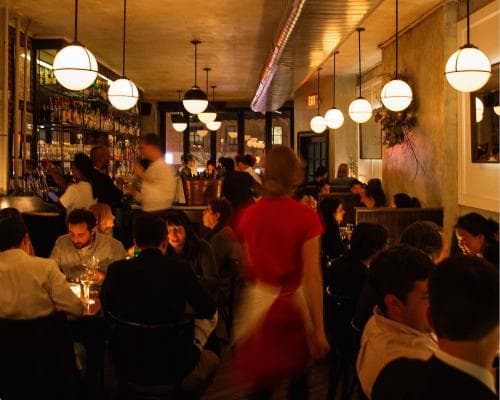
A dark emerald puck sat on a white plate. Our spoons broke its surface, sending bright shards of green ice across the porcelain. As they melted on our tongues, we tasted vegetal, flowery, herbal—slightly honeyed, aggressively salty. This was a savoury borage-and-lovage sorbet. We didn’t expect to be transported to a virgin forest, a field in spring, an alpine valley. But there we were, in Estela on the Lower East Side, surrounded by achingly stylish people. Outside, two shirtless men played checkers; a woman in a bathrobe kicked a garbage bag. For the ultra-wealthy—those who can dine anywhere, anytime—the question is never about price. It’s about authenticity. And in America, the secret ingredient isn’t truffles or caviar. It’s people.
This isn’t a travelogue. It’s a discovery. We were in America to promote a book, and we hadn’t been back since before Covid. From Britain, the US looked scary and confusing. But up close, things change. In Chicago, a breakfast TV presenter whispered a secret: no one in the city really likes deep-dish pizza. Instead, we were sent to a farm-to-table spot serving Greek-style pasta—bright, fresh, honest. In Boston, the streets were full of kilts and bagpipes for Scotland’s World Cup game. Bars ran out of beer. At a farmers’ market, the wife of an organic farmer handed us cherries—big as apricots, bright red, sweet and tart. “It’s hard work,” she said, “but we’re happy.” We drank skin-contact wine made in Massachusetts. We loved it. These moments are the real currency.
Craftsmanship here isn’t about hand-stitched leather or Swiss movements. It’s about a sorbet that tastes like a memory. Estela’s borage-and-lovage creation is a study in rarity. Borage is a flower that tastes like cucumber; lovage is an herb that tastes like celery and anise. Together, they create a flavour that is vegetal, floral, and deeply saline—a dessert that challenges the very idea of dessert. It’s not on every menu. It’s not even on every night’s menu. You have to know to ask. That’s the kind of exclusivity that money can’t buy—but that access can. For the billionaire palate, the rarest thing isn’t a limited-edition watch. It’s a dish that makes you forget where you are.
What does this signal about wealth and taste? That the new status symbol isn’t a private jet or a yacht. It’s a story. The ultra-wealthy are increasingly seeking experiences that feel unrepeatable—a conversation with a farmer, a sorbet that tastes like an alpine meadow, a bagel at Russ & Daughters while walking past the queue at Katz’s. America, for all its chaos, offers something no other country can: a collision of cultures, a raw authenticity that can’t be manufactured. The woman in the bathrobe, the men playing checkers, the TikTok girls—they’re not background noise. They’re the texture. And in a world where luxury often feels sterile, that texture is priceless.
Looking forward, the luxury market is shifting. The billionaires of tomorrow won’t just buy things. They’ll buy moments. And America—on its 250th anniversary—has a deep well of them. From southern soul food to Jewish deli, from burgers and barbecue to meatloaf and mac and cheese, the country’s culinary soul is its people. The secret ingredient isn’t a spice. It’s a story. And for those who can afford to chase it, the reward is a taste of something real. That’s the ultimate luxury.
The Experience
Book a private culinary tour of America’s hidden gems—from Estela’s off-menu sorbet to a farmer’s market cherry in Boston—curated by our editors for the discerning palate.