The Unluckiest Boot in Football: Why Seven Goals at a World Cup Still Isn't Enough
In the world of the ultra-wealthy, where every trophy, every record, every immaculate collection is a testament to having it all, there exists a more intriguing category: the almost. The near-miss. The player who scored seven goals at a World Cup and still went home without the Golden Boot. This is not a story of failure; it is a story of the brutal, beautiful margins that separate the merely great from the immortal. And for the discerning collector of sporting heritage, these margins are where the most compelling narratives reside.
Consider Lionel Messi in 2022. He scored seven goals—a haul that would have won the Golden Boot in almost any other tournament. Yet he was denied by Kylian Mbappé’s hat-trick in the final, a performance so electrifying it rewrote the script. Messi, of course, took home the Golden Ball and the World Cup trophy itself. But the gilded shoe? That went to a younger king. This is the kind of exquisite tension that defines the luxury of sport: the knowledge that even the gods are not immune to a rival’s brilliance.
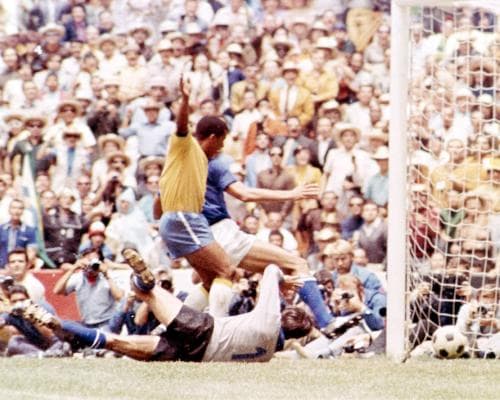
The list of those who have scored seven goals at a World Cup without winning the Golden Boot reads like a roll call of footballing nobility. Brazil’s Jairzinho, a man whose 1970 team is still considered the most beautiful ever assembled, scored in every match of that tournament—a feat unmatched for half a century—yet finished four goals behind Gerd Müller. The German striker, a relentless predator, bagged ten. Jairzinho’s seven were sublime, but the trophy went elsewhere. For the collector, this is the difference between a rare vintage and a perfect one: both are exceptional, but only one is the crown jewel.
Then there is the case of Rob Rensenbrink, a name that whispers tragedy to those who know. In the 1978 final, with the scores level, his stoppage-time shot hit the post—a freakish bounce that denied him both the Golden Boot and the World Cup. Had that ball gone in, he would have finished with six goals to Mario Kempes’s five. Instead, he is remembered as the unluckiest man in World Cup history. For the connoisseur of sporting narratives, Rensenbrink’s story is more valuable than any trophy: it is a reminder that the finest collections are often built on the stories of what almost was.
This phenomenon extends to the women’s game, where Heidi Mohr’s seven goals in 1991 were eclipsed by Michelle Akers-Stahl’s ten. Abby Wambach and Ragnhild Gulbrandsen each scored six in 2007, only to be outdone by Brazil’s Marta. The pattern is clear: to win the Golden Boot, you must be not just great, but transcendent. Seven goals is a statement of elite class. Eight or more is a declaration of dominance. The former is a collector’s item; the latter is a museum piece.
For the ultra-wealthy patron of sport, these near-misses are the ultimate conversation starters. They represent a kind of refined taste that goes beyond the obvious—a preference for the nuanced over the gaudy. A signed Messi shirt from 2022 is a treasure, but a match-worn Rensenbrink shirt from the 1978 final, with the story of that post, is a legend. It signals that you understand the game’s deeper currents: the luck, the timing, the cruel geometry of a round ball on a rectangular pitch.
As the 2026 World Cup approaches, with Messi and Mbappé already on six goals, the record for most goals without winning the Golden Boot may well be broken again. Whoever claims that unwanted crown will join a select fraternity—players whose brilliance was so blinding that only an even greater light could outshine it. For the collector, that is the rarest commodity of all: a story that proves even the best can be second-best, and that sometimes, the most exquisite thing you can own is the one that got away.