The Art of Controlled Chaos: France’s Final Masterpiece Under Deschamps
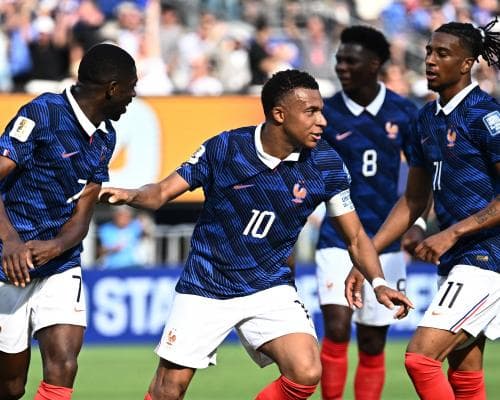
There is a certain kind of luxury that comes not from opulence, but from the studied nonchalance of the truly powerful. It is the way a cat, having cornered its mouse, pauses—not out of cruelty, but out of a deep, almost artistic need to explore every possible angle of the kill. This is the France we are witnessing at the 2026 World Cup: a team that has scored at least three goals in each of its last four outings, yet still seems to be idly sketching its own greatness, as if the final score were merely a suggestion. For the connoisseur of elite performance—whether on the pitch or in the private jet—this is the rarest of spectacles: absolute mastery disguised as experimentation.
The transformation is astonishing. For fourteen years, Didier Deschamps built France in his own image: rigid, conservative, engineered to within an inch of its life. These were teams that won through attrition, not artistry—a kind of football that would feel at home in a boardroom of hedge fund managers, where every move is calculated and risk is a four-letter word. Yet now, in what he knows is his final act—he will step down after this tournament—Deschamps has suddenly, almost perversely, handed the keys to the kingdom to three young princes: Kylian Mbappé, Ousmane Dembélé, and the revelatory Michael Olise. It is as if a master watchmaker, after a lifetime of crafting precise chronometers, has decided to build a kaleidoscope.
To watch these three is to understand the difference between wealth and taste. Mbappé, the diamond of the squad, moves with the gravity of a sovereign; his every touch is a declaration. Dembélé, once a wild card, now plays with the controlled fury of a thoroughbred finally let off the leash. And Olise—the revelation—glides through defenses like a whisper through a silk curtain, his vision so acute it borders on clairvoyance. Together, they are not just scoring goals; they are composing them, each sequence a vignette of what happens when raw talent meets the absolute freedom to express it. This is the kind of access that money cannot buy—a front-row seat to the unraveling of a footballing dynasty, live from the stands of a World Cup stadium.
The rarity of this moment is its true currency. Deschamps, who lost his mother just days before the tournament, has chosen to spend his last chips not on caution, but on a kind of creative abandon that feels almost reckless—until you realize it is the most calculated move of his career. He has subscribed to a Great Man Theory of football, betting that genius will outpace system. In the world of luxury travel, we see this same shift: the ultra-wealthy are increasingly abandoning curated itineraries for bespoke, improvisational journeys where the destination is less important than the people who guide them there. France’s attacking triumvirate is the sporting equivalent of a private yacht that changes course on a whim, because the captain knows the waters better than anyone.
What this signals about the future of luxury—in sport and beyond—is a quiet revolution. The old guard, with its obsession with control and predictability, is giving way to a new ethos: one that values spontaneity, personality, and the sheer thrill of watching brilliance unfold in real time. For the traveler who has seen everything, the ultimate luxury is no longer the five-star hotel or the private jet, but the experience of being present when something unprecedented happens. This France team, in its final, glorious improvisation, offers exactly that—a journey not to a destination, but into the heart of possibility itself.
Where the wealthy go next, then, is not to a place, but to a state of mind. They will follow Mbappé, Dembélé, and Olise not because they know the outcome, but because they know the performance will be unforgettable. In the same way that a collector buys a work of art before the artist’s retrospective, the true connoisseur of luxury travel understands that the most valuable ticket is the one to an era’s final bow. France under Deschamps is that era—and it is ending in a blaze of controlled chaos, the likes of which we may never see again.